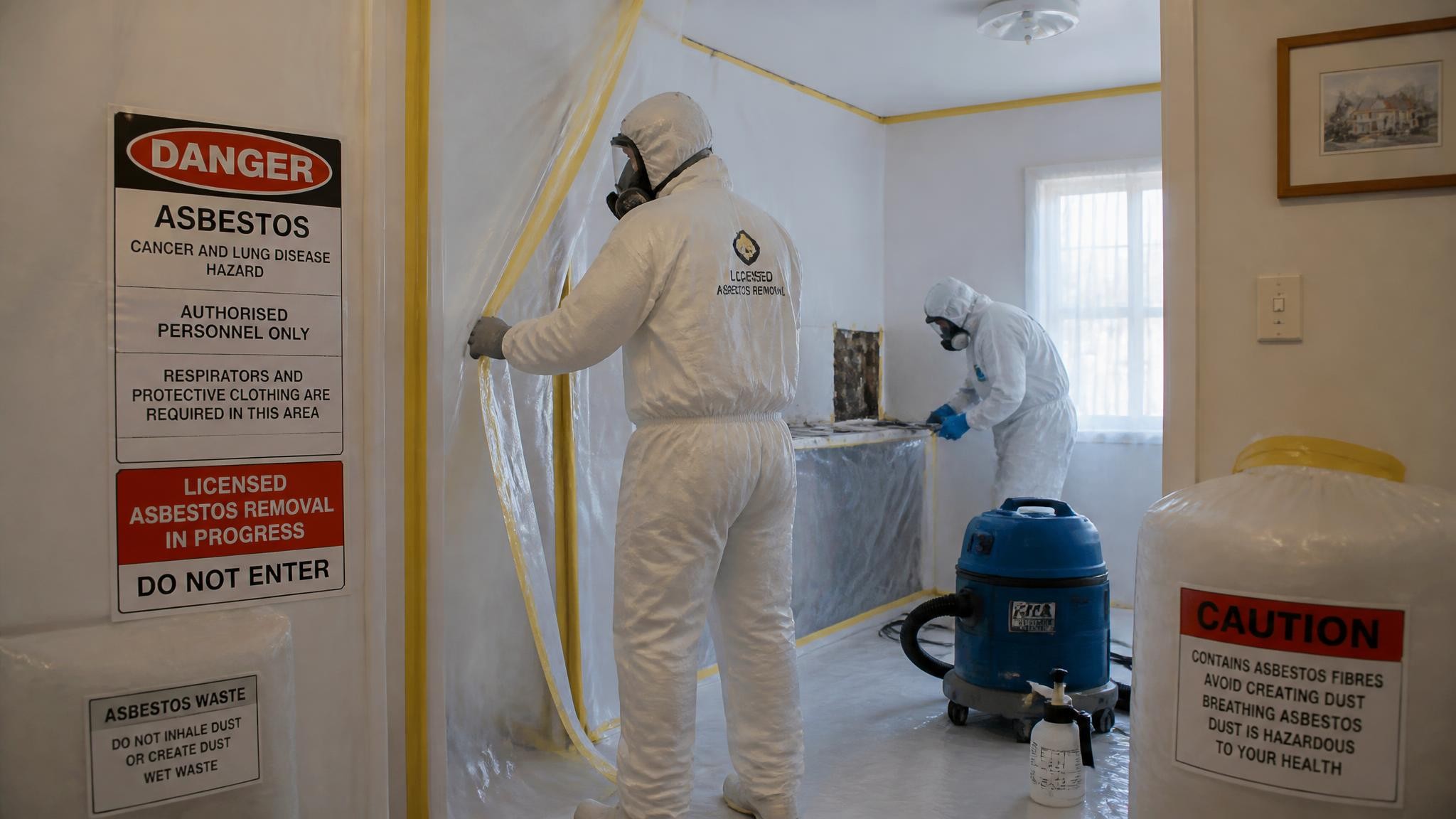
asbestos found in home
Stay calm and avoid disturbing it. C&A Asbestos Removal can assess the material, plan the safest approach, and manage licensed removal from your home through to compliant disposal.
Safe work practices, clear communication, and disposal documentation
Found or suspect asbestos? Do not disturb it.
Asbestos-containing materials are not always easy to identify by sight. They can become dangerous when they are cut, drilled, sanded, broken, scraped, or otherwise disturbed. If you have found a suspicious sheet, lining, tile, eave, or other building material, stop work and keep people away from the area until it has been properly assessed.
Residential asbestos removal
A practical next step when asbestos is discovered in your home
Discovering asbestos during a renovation, inspection, repair, or property purchase can be stressful. Older Australian homes may contain asbestos in more places than expected, particularly properties built or renovated before the 1990s.
C&A Asbestos Removal provides a professional, end-to-end service for homeowners, landlords, renovators, and property investors. We help determine what needs to happen next, establish appropriate controls, remove affected materials safely, and arrange transport to an EPA-licensed disposal facility.
You deal directly with a dedicated team rather than a call centre. We provide a clear scope of work, explain the process, respect your property, and supply disposal documentation after the job.
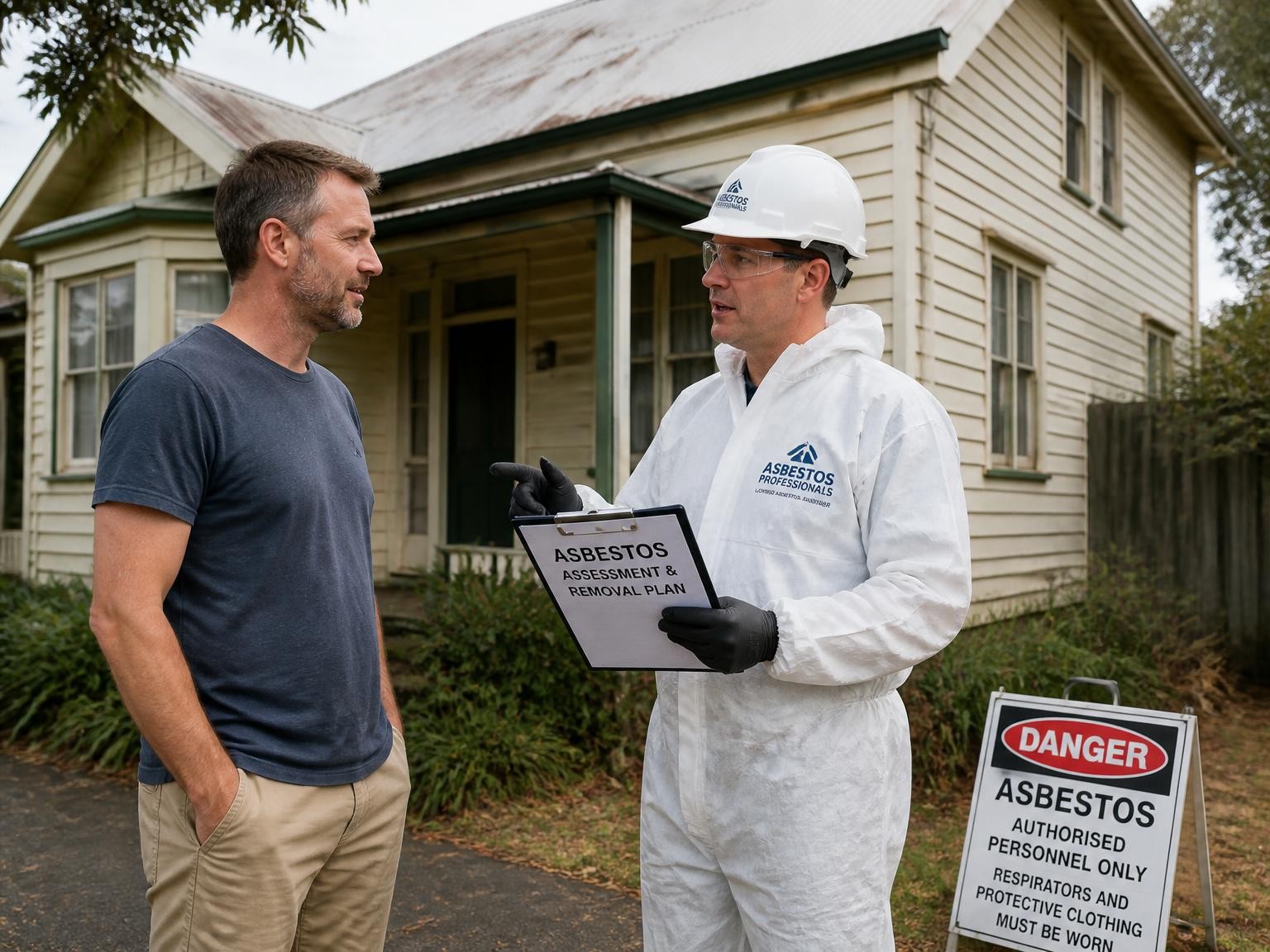
Where asbestos may be found
Common asbestos areas in Australian homes
Asbestos was used in many residential building products because it was durable, fire-resistant, and versatile. We can help with the safe removal of a range of asbestos-containing materials in and around your home.
Bathrooms and laundries
Wall linings, ceilings, backing boards, bath panels, and other fibro materials may contain asbestos, especially in older wet areas.
Kitchens and internal linings
Asbestos cement sheets and backing materials can be present behind splashbacks, around fixtures, or in wall and ceiling linings.
Flooring and underlay
Older vinyl tiles, sheet flooring, and adhesives may contain asbestos. Lifting or scraping flooring can release fibres if the material is damaged.
Eaves and soffits
Asbestos-containing eaves, soffits, gable ends, and external wall sheets are common concerns during roofing, painting, or exterior renovations.
Sheds, garages, and carports
Outdoor structures may have asbestos roof sheets, wall panels, gables, or lining boards that need controlled dismantling.
Fences and garden structures
Fibro fence panels, garden walls, and other cement sheet structures can deteriorate over time and should be handled carefully.
If you are unsure whether a material contains asbestos, avoid disturbing it. Identification may require professional sampling and laboratory analysis before removal planning begins.
Safety and compliance
Why professional asbestos removal matters
Asbestos fibres are microscopic and cannot be reliably managed by simply wearing a basic dust mask or taking materials outside. The risk increases when asbestos is damaged or disturbed during renovation and demolition work.
Appropriate protective equipment
Our team uses suitable PPE and follows planned controls for the material, work area, and site conditions.
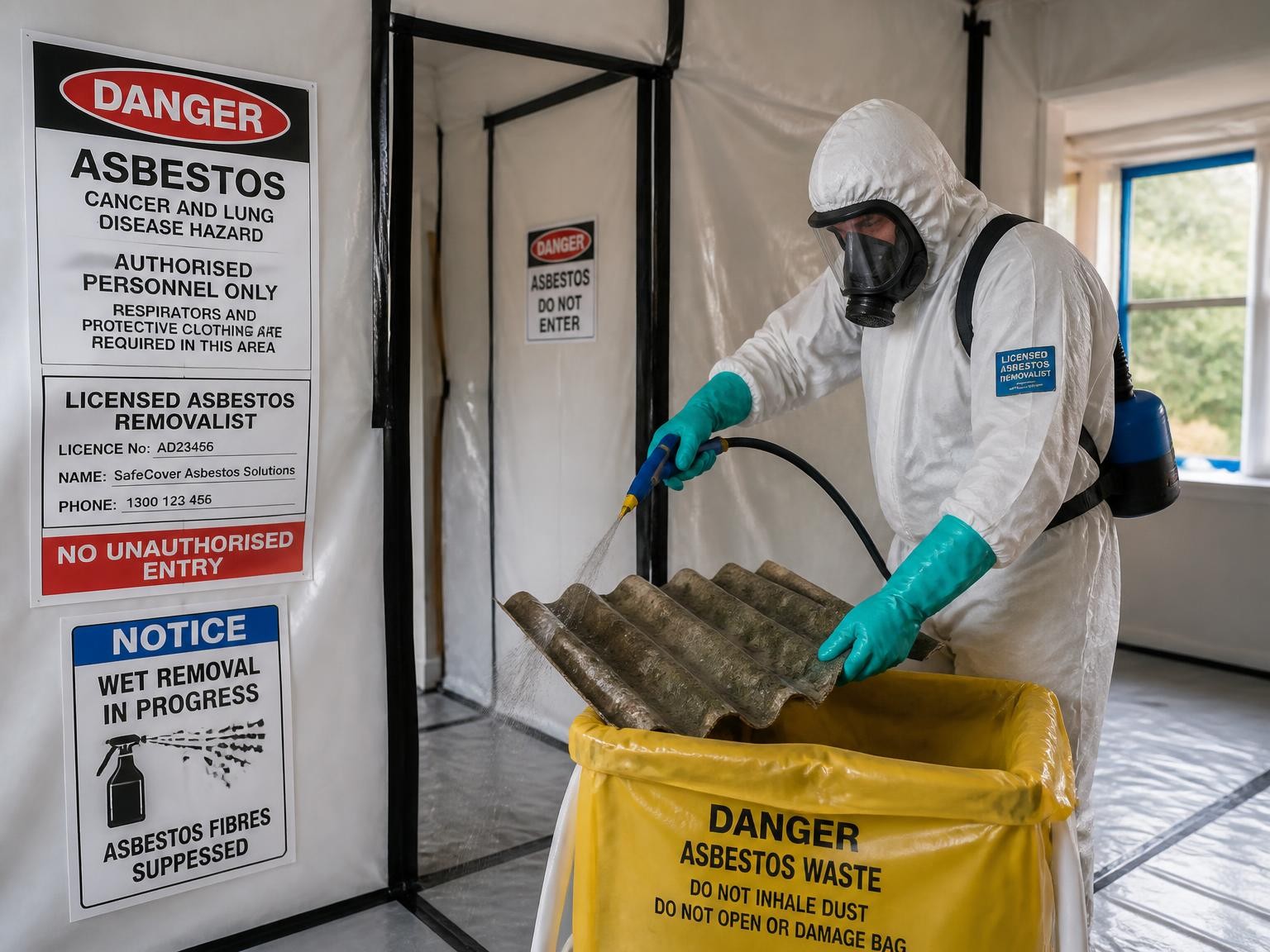
Wet methods and controlled work areas
Wet removal methods and containment zones are used where appropriate to help minimise airborne fibre release.
Compliant transport and disposal
Asbestos waste is packaged, labelled, tracked, and transported to licensed disposal facilities rather than placed in ordinary household waste.
Documentation for your records
You receive disposal documentation after the work, helping you keep a clear record for future maintenance, renovation, or property sale.
Our process
The safe residential asbestos removal process
Every home is different, so we tailor the work plan to the location, condition, quantity, access, and type of asbestos-containing material.
Initial conversation
Call or enquire with details about the material, its location, the age of the property, and what work you were planning. Photos may help with an initial discussion, but they do not replace a proper assessment.
Assessment and scope
We assess the affected area, access, condition of the material, surrounding surfaces, and any practical risks. If testing is required, sampling and laboratory analysis can be coordinated before removal.
Removal plan and site controls
Before work starts, we establish the appropriate removal method, exclusion zone, access arrangements, PPE, containment, and waste handling controls for your home.
Controlled removal
Materials are carefully removed using appropriate methods. We aim to keep disruption to your household to a minimum while maintaining safe separation from occupants, visitors, and other workers.
Clean-up and inspection
The work area is cleaned using appropriate techniques. Where the project or circumstances require it, independent hygienist air monitoring can be coordinated as part of the post-removal process.
Disposal and records
Waste is double-bagged or wrapped as required, labelled, transported appropriately, and disposed of at a licensed facility. Disposal documentation is provided for your records.
For homeowners
What to do after finding asbestos in your home
The safest response is to pause, isolate the area where practical, and obtain professional advice. You do not need to make the material safe yourself before speaking with a removalist.
Speak directly with C&A on 0473 636 666Before we arrive
- Keep children, pets, visitors, and unnecessary workers away from the area.
- Do not cut, drill, sand, sweep, pressure wash, or break the suspected material.
- Do not put suspected asbestos in household bins or take it to a general waste facility.
- Tell other trades working on the property that suspected asbestos has been identified.
- Keep any available building reports, renovation details, or previous test results.
Residential asbestos removal for homes at every stage
Whether you are repairing one damaged panel or preparing an entire property for renovation, we can help you understand the next step.
Renovations
Identify and remove affected materials before demolition, plumbing, electrical, bathroom, kitchen, or extension work.
Older homes
Manage asbestos in pre-1990 homes, including fibro walls, ceilings, eaves, wet areas, flooring, and external structures.
Property sales
Obtain a clear scope of work and disposal records when asbestos needs to be addressed before listing or settlement.
Rental properties
Landlords and property managers can arrange a controlled response with communication designed to minimise disruption for occupants.
A calm, professional approach to asbestos in the home
C&A Asbestos Removal combines practical site experience with a strong focus on safety, compliance, and straightforward communication.
Clear communication
Speak directly with the team, receive a clear scope, and understand what is included before work begins.
Tidy site practices
Your home and belongings are treated with care, with work areas controlled and cleaned appropriately when removal is complete.
Complete documentation
Waste is handled through licensed disposal channels, with documentation supplied after the job for your records.
Frequently Asked Questions About Asbestos Found in a Home
What should I do if I find asbestos in my home?
Stop work and avoid disturbing the suspected material. Keep people and pets away from the area, do not sweep or vacuum nearby dust, and contact a qualified asbestos professional for advice. If the material has been damaged, explain this when you enquire so the appropriate response can be planned.
How can I tell if a material in my house contains asbestos?
You generally cannot confirm asbestos by appearance alone. The age and construction style of the property may indicate a possibility, but reliable identification may require a professional assessment, sample collection, and laboratory analysis. Do not cut or break a material to obtain your own sample.
What areas of a home commonly contain asbestos?
Common areas include bathroom and laundry linings, kitchen backing boards, internal walls and ceilings, eaves and soffits, flooring and vinyl tiles, garages, sheds, carports, fences, and roof sheeting. The presence of asbestos depends on the product and the age and history of the property.
Can I remove asbestos from my home myself?
DIY asbestos removal is not recommended. Requirements can vary between Australian states and territories, including when a licensed removalist is required. Improper handling can expose occupants, neighbours, and other workers to asbestos fibres. A licensed professional can advise on the safest and compliant approach for your situation.
Will I need asbestos testing before removal?
Testing may be appropriate when the material has not already been identified or documented. C&A can discuss the situation with you and coordinate professional sampling and laboratory analysis where required. If the material is already known to contain asbestos, removal planning can proceed without unnecessary disturbance.
How is asbestos removed from a house safely?
The process starts with an assessment and work plan. The area is controlled, suitable PPE is used, and appropriate wet methods and containment are applied. Materials are carefully removed, packaged and labelled, transported to a licensed facility, and followed by a suitable clean-up and documentation process.
How much does residential asbestos removal cost?
The cost depends on the type and quantity of material, its condition, location, access, containment requirements, labour, transport, disposal, and whether testing or additional cleaning is needed. Contact C&A for a free, no-obligation quote based on your property and the work required.
Can asbestos waste go in a regular rubbish bin?
No. Asbestos waste must not be placed in household bins or mixed with general construction waste. It needs to be packaged and transported in accordance with applicable requirements and taken to an authorised disposal facility. C&A manages this part of the process and provides disposal documentation.
Found asbestos in your home?
Get clear advice and a free, no-obligation quote from a licensed residential asbestos removal team. Enquire today and take the next safe step.
You can also call 0473 636 666 or email cheataanny@gmail.com