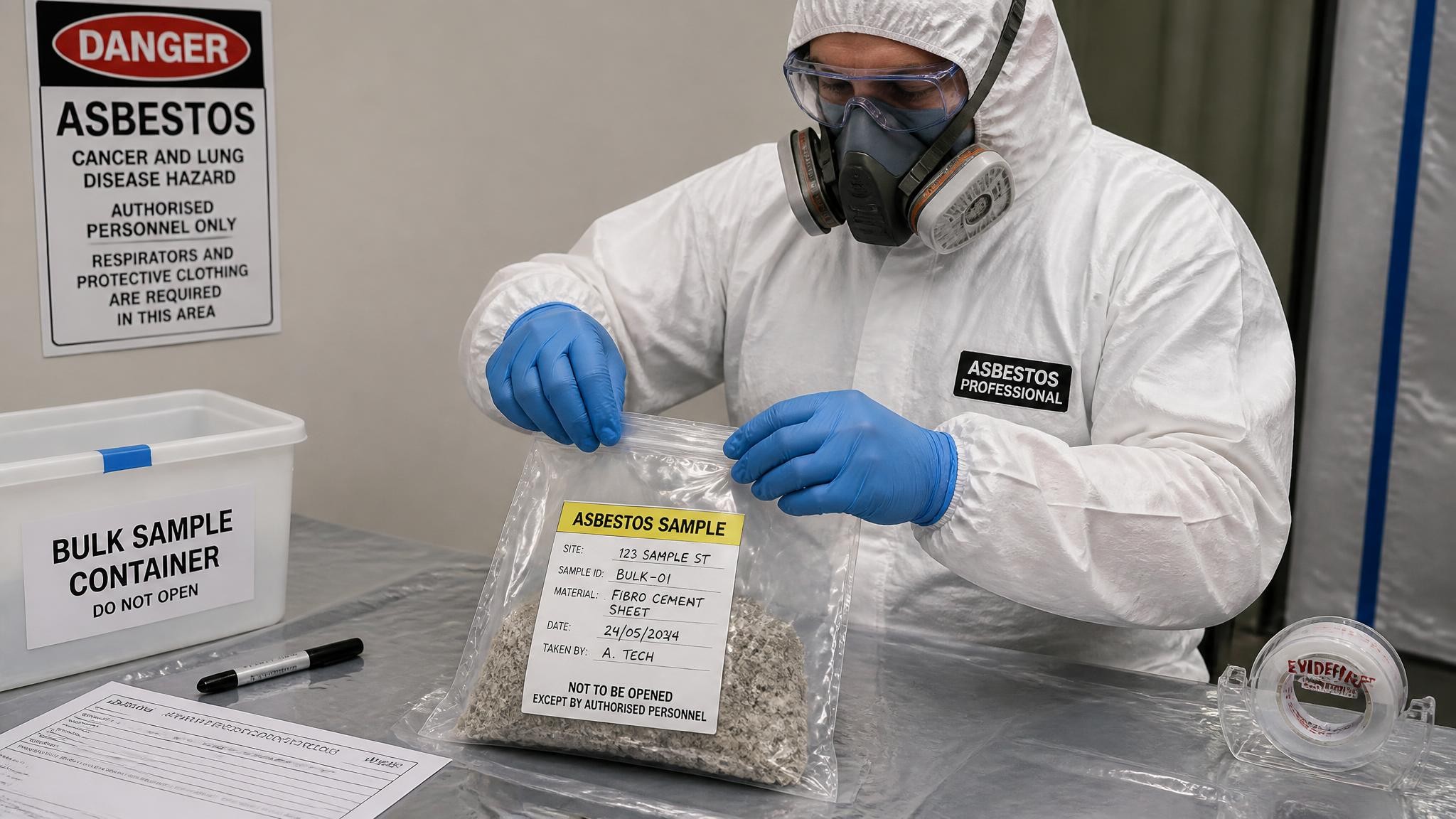
testing lab asbestos
Reliable asbestos testing before removal, renovation, demolition or property handover
C&A Asbestos Removal helps homeowners, builders, property managers and businesses arrange the right asbestos testing pathway. We coordinate bulk sample analysis and, where required, air quality monitoring through suitable independent professionals and laboratories across Australia.
Clear results, practical advice and a safe next step
Asbestos testing Australia
Testing is the safest way to understand what a building material contains
Asbestos-containing materials can look like ordinary cement sheet, insulation, vinyl flooring, roofing, textured coatings or other common building products. You cannot reliably confirm asbestos by sight alone. Testing may be appropriate when a material is damaged, planned for disturbance, or located in a property built before asbestos use was phased out.
C&A Asbestos Removal provides a straightforward path from initial concern to a documented answer. We discuss the material and your proposed work, help determine whether bulk sample testing or air monitoring is appropriate, and coordinate the next step with suitable independent testing professionals.
Do not drill, cut, sand, break or collect a suspected asbestos sample yourself. Disturbing a material can release fibres. Contact C&A first so the sampling approach can be assessed safely.
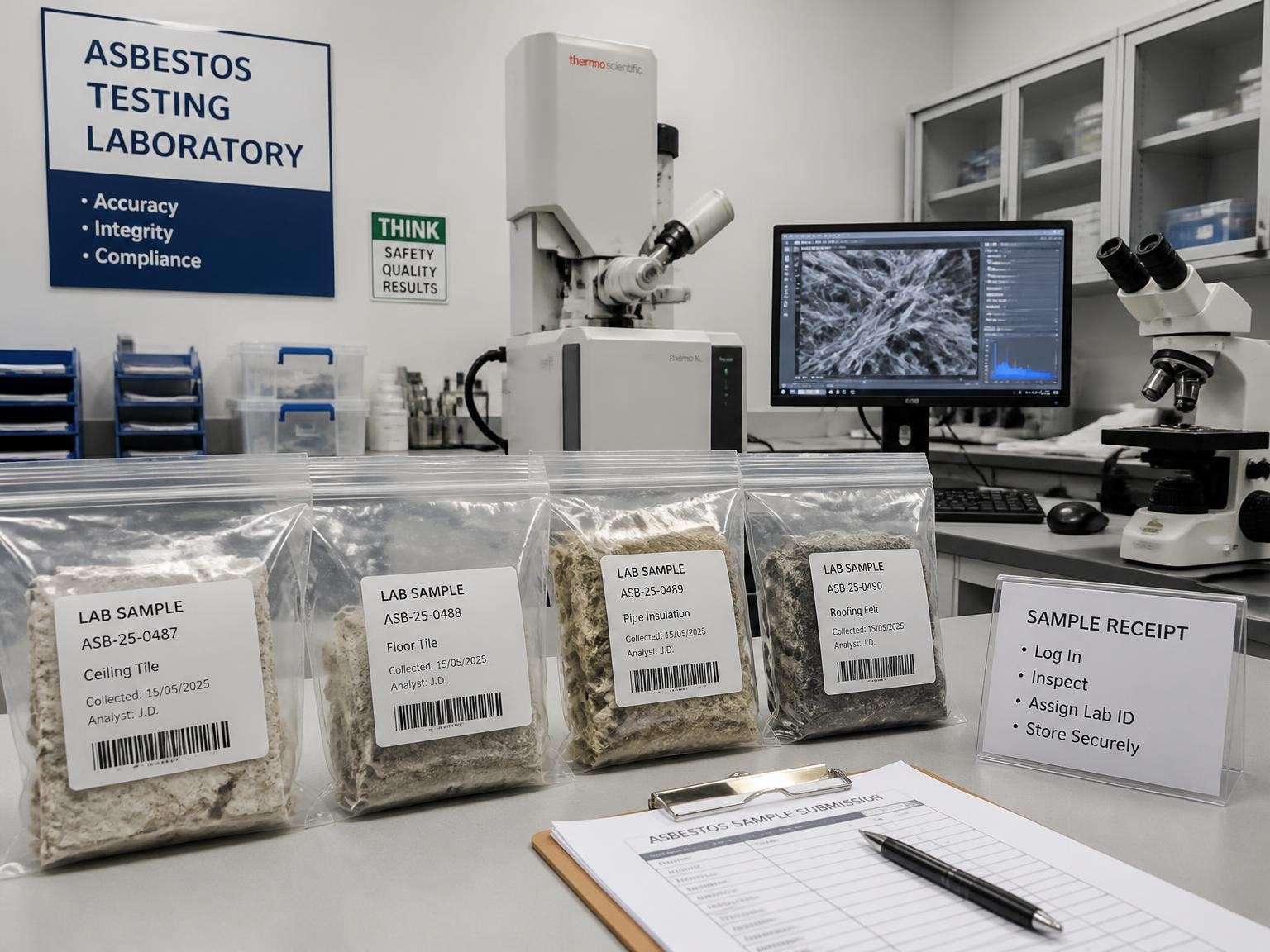
Two common testing pathways
Bulk sample testing and air quality testing
The right test depends on the question being answered. Bulk sampling examines a physical building material, while air monitoring assesses airborne fibre levels in a particular area and situation.
Bulk sample asbestos testing
Testing the material itself
Bulk sample analysis is used to determine whether a physical building product contains asbestos. A suitably collected sample may be taken from materials such as fibrous cement sheeting, roof panels, eaves, wall linings, flooring, lagging or other suspect products.
Bulk testing may help with:
- Confirming whether a suspect material is asbestos-containing material.
- Planning renovation, demolition or maintenance work safely.
- Clarifying the scope of asbestos removal before a quote is prepared.
- Supporting property, workplace or project records with written results.
Sampling should be performed by a competent person using appropriate controls. C&A can discuss the safest way to arrange this rather than encouraging unprotected DIY sampling.
Asbestos air quality testing
Testing the air in a defined area
Air monitoring measures airborne fibres during or after specific asbestos-related work. It can be relevant during higher-risk removal activities, in occupied workplaces, after an incident, or when a post-removal clearance assessment is required.
Air monitoring may be used for:
- Checking conditions around controlled asbestos removal work.
- Providing reassurance after an accidental disturbance or suspected release.
- Supporting post-removal clearance and reoccupation decisions where required.
- Helping protect workers, occupants, neighbours and other people near the work area.
Air monitoring is generally coordinated with an independent asbestos hygienist or other appropriately qualified professional, depending on the project and applicable state or territory requirements.
Why laboratory accreditation matters
Test results are only useful when the sample has been handled correctly and analysed by a competent laboratory using an appropriate method. In Australia, clients commonly look for testing completed by a laboratory with relevant accreditation and scope, such as NATA accreditation for the type of asbestos analysis being requested.
Accreditation is not a blanket approval for every possible test. The laboratory needs to have the relevant capability and scope for the analysis required. C&A can help identify the appropriate testing pathway and coordinate with suitable independent professionals rather than treating every project as the same.
Sample identification and chain-of-custody details can be recorded clearly.
Reports can be matched to the specific material or monitored area.
Results can inform the removal scope, control plan and project records.
Clear documentation
A laboratory result should lead to a clear, practical decision
A positive asbestos result does not always mean immediate removal is required. Depending on its condition, location and intended use of the area, the material may be managed in place or scheduled for controlled removal. If it will be cut, demolished, repaired or otherwise disturbed, the result helps determine the appropriate controls.
When C&A receives or coordinates testing information, we use it to help define the work. This may include identifying the affected material, confirming the required removal area, considering access and containment, and explaining the disposal and documentation process.
Email the C&A team about testingFrom concern to action
How C&A manages asbestos testing before removal
We keep the process simple and communicate what is needed at each stage. C&A is a licensed asbestos removal company, and where independent sampling, laboratory analysis or air monitoring is required, we coordinate the appropriate professionals.
Discuss the material and your plans
Tell us what you have found, where it is located and what you want to do. Photos may help with an initial discussion, but they cannot confirm whether a material contains asbestos.
Identify the appropriate test
We help determine whether the situation calls for bulk material testing, air monitoring, a site assessment, or a combination of these services.
Coordinate sampling or monitoring
C&A coordinates with a suitable independent hygienist or testing laboratory when required. The sampling approach is selected around the material, site conditions and proposed work.
Review the result and plan the next step
Once results are available, we explain how they affect the removal scope, controls, access arrangements, waste handling and project timing.
Complete compliant removal and records
If removal is required, C&A manages the work using appropriate PPE, wet methods and containment zones. Asbestos waste is double-bagged, transported to licensed disposal facilities and supported by disposal documentation.
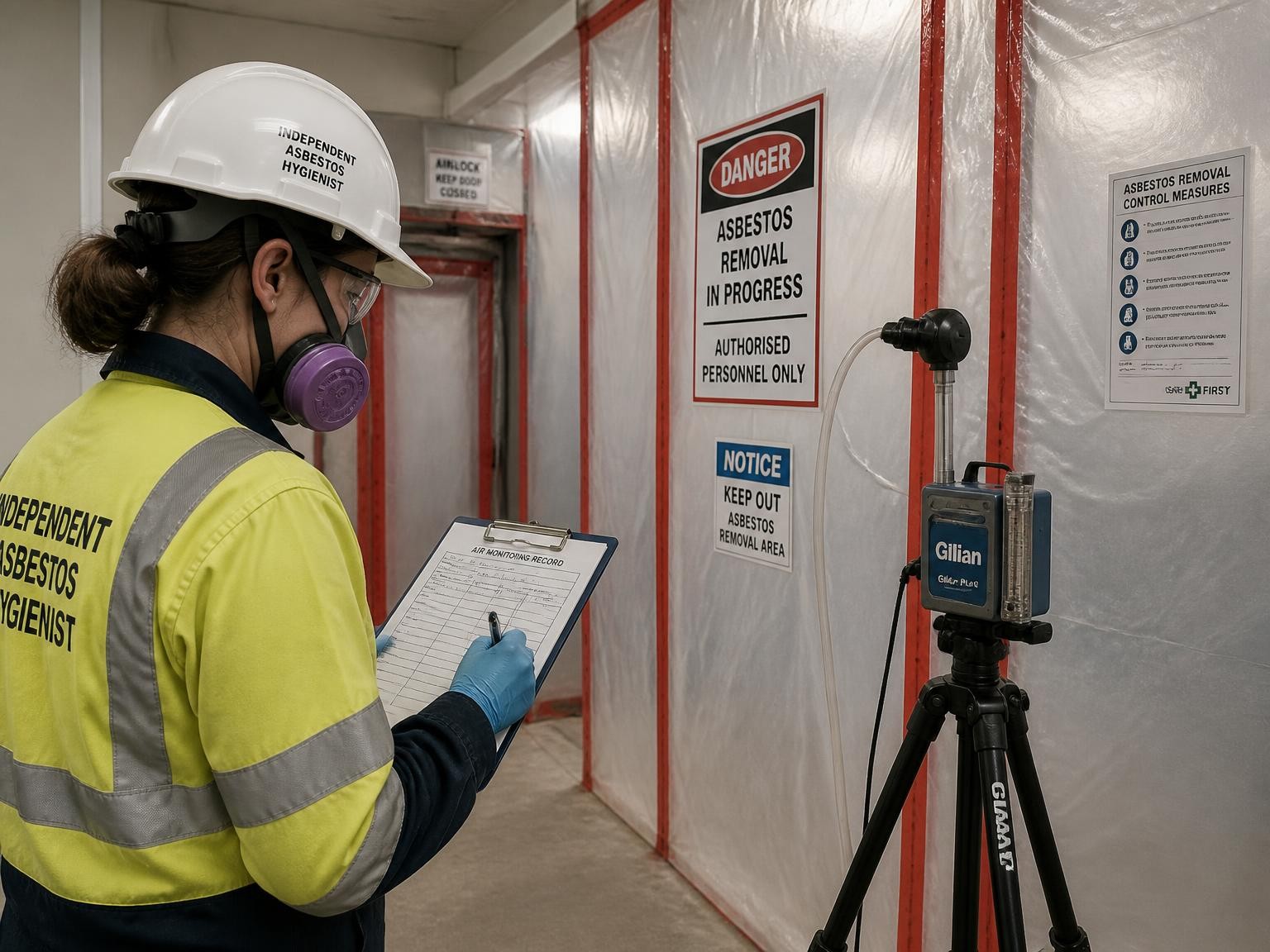
Air monitoring explained
When is asbestos air quality testing needed?
Air monitoring is not the same as testing a piece of building material. It is used to assess airborne fibre levels in a defined location and timeframe. The need for monitoring depends on the work, the type and condition of asbestos, the surrounding environment and applicable workplace health and safety requirements.
It may be considered for commercial premises, occupied buildings, higher-risk removal work, sensitive locations, post-incident investigations or post-removal clearance. An independent hygienist can determine the monitoring plan, sampling locations and reporting requirements.
Commercial and strata properties
Monitoring can help coordinate work around tenants, staff, customers and neighbouring areas.
Controlled removal environments
Air monitoring may form part of a broader control and clearance process where required.
Documented project close-out
Reports can be retained with the removal and disposal records for the property or workplace.
A calm, professional asbestos testing process
Finding suspected asbestos can be stressful, particularly when renovation or a property transaction is already underway. C&A gives you a direct point of contact and explains the practical options without unnecessary confusion.
Direct communication
Speak directly with the team by mobile rather than being passed through a call centre.
Clear scope
Testing information is used to define what needs to be removed and how the work will be controlled.
Safety-led work
Removal follows appropriate PPE, wet methods, containment and Safe Work Australia guidance.
Useful records
Relevant testing, removal and disposal documents can be kept together for future reference.
Testing support Australia-wide
Who can contact C&A about asbestos testing?
Homeowners
For suspected asbestos in bathrooms, kitchens, eaves, flooring, walls, roofs and other parts of older homes.
Renovators and builders
For projects where testing may be needed before demolition, repairs, refurbishment or site preparation.
Property and strata managers
For multi-unit buildings, common areas, maintenance programs and documented asbestos management.
Business owners
For workplaces that need a practical plan to manage suspected materials with minimal disruption.
Testing before asbestos removal can prevent costly uncertainty
Starting work without understanding the materials can result in delays, unexpected controls, unsafe disturbance and additional disposal requirements. Testing and assessment help the removal team prepare the right scope from the beginning.
Know what is present
A suitable bulk sample result can clarify whether a particular material should be treated as asbestos-containing material.
Define the work area
Results and site conditions help establish the removal boundary, access controls, containment and waste requirements.
Plan with fewer surprises
Early coordination gives homeowners, contractors and managers a clearer path to scheduling compliant removal.
Frequently Asked Questions About Asbestos Testing Labs
What is bulk sample asbestos testing?
Bulk sample testing analyses a physical piece of a suspected building material to determine whether asbestos is present. It may be used for fibrous cement sheets, roofing, eaves, wall linings, flooring and other materials. Sampling should be arranged through a competent professional because collecting a sample can disturb asbestos fibres.
What is asbestos air quality testing?
Air quality testing, commonly referred to as air monitoring, measures airborne fibres in a defined area during or after asbestos-related work. It is different from testing a building material. An independent asbestos hygienist or other appropriately qualified professional can advise whether air monitoring is needed for your circumstances.
Does C&A operate an asbestos testing laboratory?
C&A Asbestos Removal is a licensed asbestos removal company, not a laboratory. When testing is appropriate, C&A coordinates with suitable independent sampling professionals, hygienists and laboratories. This keeps the testing and removal roles clear while allowing the result to be used effectively in the removal plan.
Why should an asbestos laboratory be accredited?
Accreditation provides confidence that a laboratory has been assessed against recognised requirements for the relevant analysis. In Australia, NATA accreditation and the laboratory's specific scope may be relevant. Accreditation should be checked for the actual test required, because not every laboratory is accredited for every type of asbestos analysis.
Can I send my own asbestos sample to a lab?
It is not advisable to collect a suspected asbestos sample without professional advice. Cutting, drilling, snapping or scraping a material can release fibres and contaminate the surrounding area. Contact C&A first so we can discuss whether testing is necessary and how it can be arranged safely.
Should asbestos testing happen before removal?
Testing may be appropriate before removal when the material has not been confirmed, when the removal scope is unclear, or when a project requires documented identification. In some situations, a material may be presumed to contain asbestos and managed accordingly. C&A can discuss the most suitable approach for your site.
How long do asbestos test results take?
Turnaround depends on the laboratory, the type of analysis, sample handling and whether standard or urgent service is requested. C&A can explain the expected process when arranging testing and help coordinate the result with your proposed removal schedule.
How much does asbestos testing cost?
The cost depends on the number and type of samples, site access, whether an independent hygienist is required, laboratory fees and the reporting needed. Contact C&A for a clear, no-obligation discussion about your testing requirements.
Need to arrange asbestos testing?
Enquire with C&A Asbestos Removal today. We can discuss bulk sample testing, air monitoring and the safest way to move from test results to compliant asbestos removal.
Category: Asbestos Testing