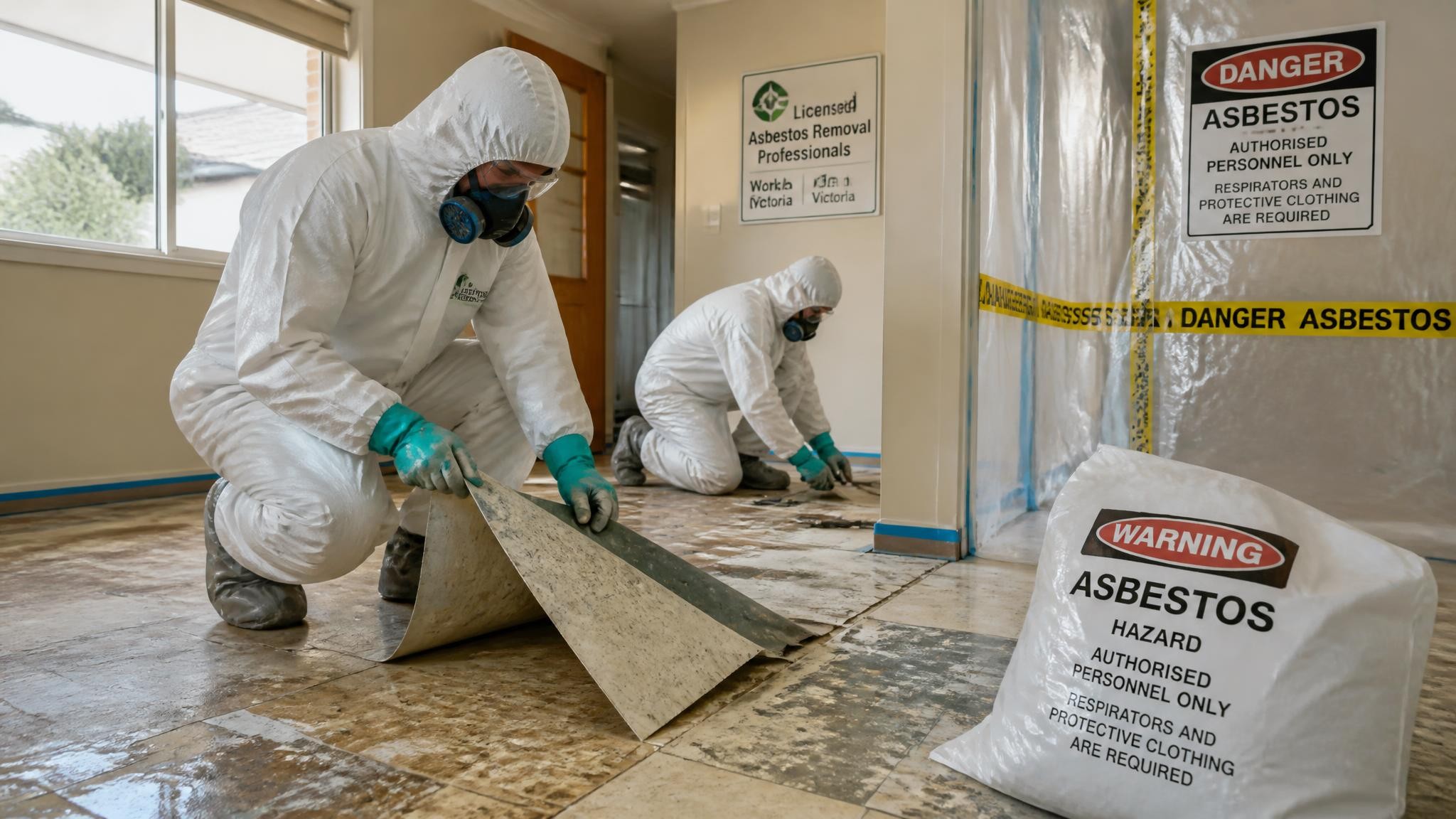
Residential asbestos removal
asbestos floors
Safe, licensed removal of asbestos-containing floor tiles, sheet flooring, adhesives, and underlay from older Australian homes.
Licensed removal, controlled work areas, and compliant disposal
Do you have asbestos flooring in your home?
Asbestos was used in many Australian building products before its use was progressively restricted and prohibited. Older homes may contain asbestos in floor tiles, vinyl sheet flooring, backing materials, carpet underlay, and the adhesives used to secure them.
Flooring that is intact and left undisturbed may not present the same risk as damaged or aggressively removed material. However, sanding, scraping, grinding, breaking, or lifting asbestos-containing flooring during a renovation can release hazardous fibres.
C&A Asbestos Removal helps homeowners identify the safest next step and manages the removal, packaging, transport, disposal, and post-removal clean as one coordinated service.
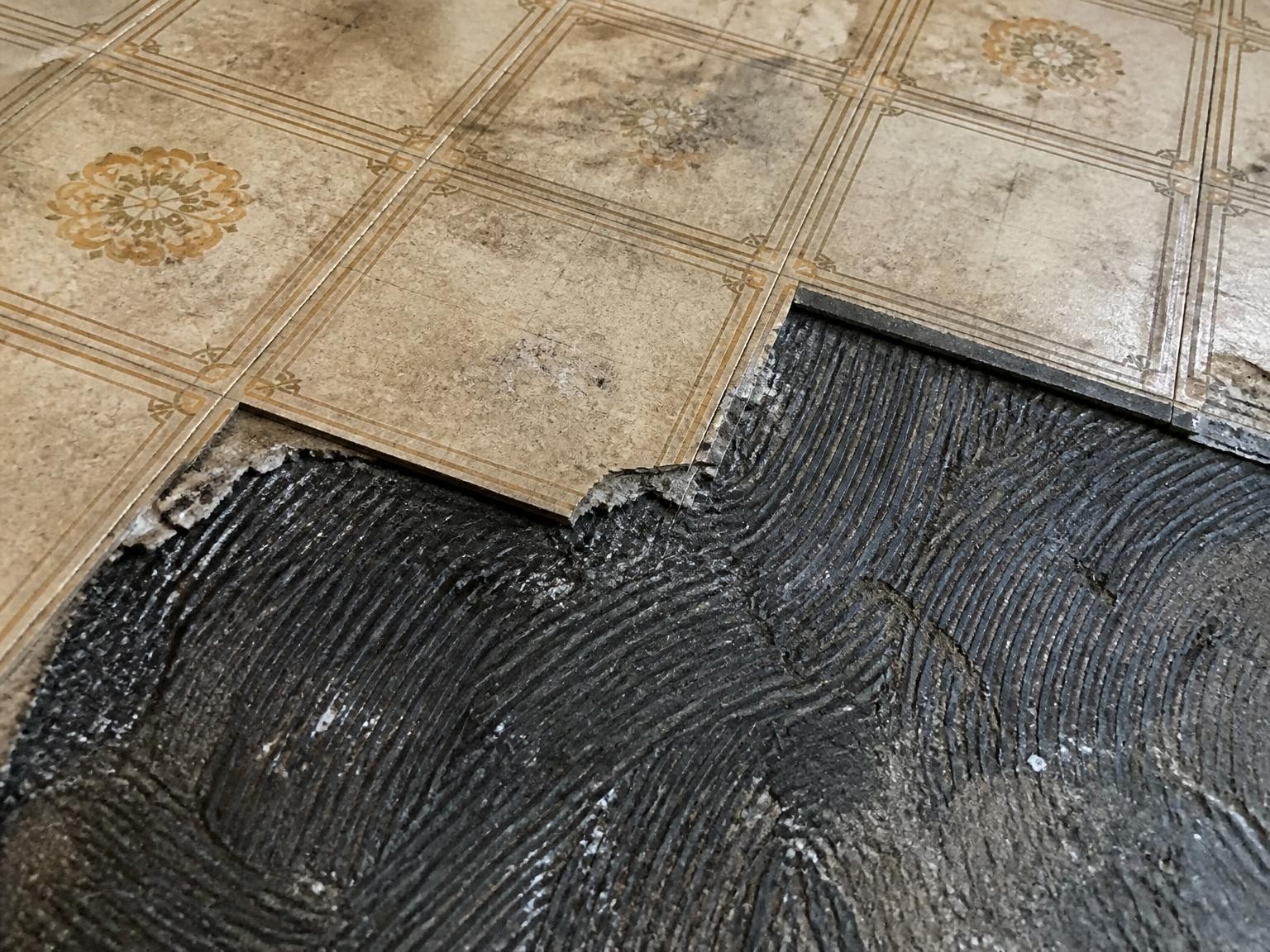
Common asbestos flooring in older homes
Asbestos cannot be confirmed reliably by colour, pattern, age, or appearance alone. These are common places where asbestos may be found, but professional assessment or sampling may be needed before renovation work begins.
Vinyl floor tiles
Older square vinyl tiles, including patterned or plain tiles, may contain asbestos. The black, brown, or dark adhesive beneath them may also require careful management.
Sheet vinyl and lino
Vinyl sheet flooring and older linoleum products can contain asbestos in the backing, paper layer, or adhesive. Removing them without disturbing the material takes careful planning.
Older floor coverings
Asbestos may be present beneath carpet, in backing materials, or under later flooring layers. A renovation can expose materials that were previously hidden.
Black bitumen adhesive
Dark adhesive under old tiles or sheet flooring may be asbestos-containing. It should not be sanded, ground, dry-scraped, or disturbed with uncontrolled power tools.
Kitchen and bathroom flooring
Renovations in kitchens, bathrooms, laundries, and hallways can uncover old tiles, sheet products, or floor substrates that need asbestos controls.
Unknown flooring materials
If you are unsure what your flooring contains, stop work and arrange an assessment. Treating uncertain materials cautiously helps protect residents, tradespeople, and visitors.
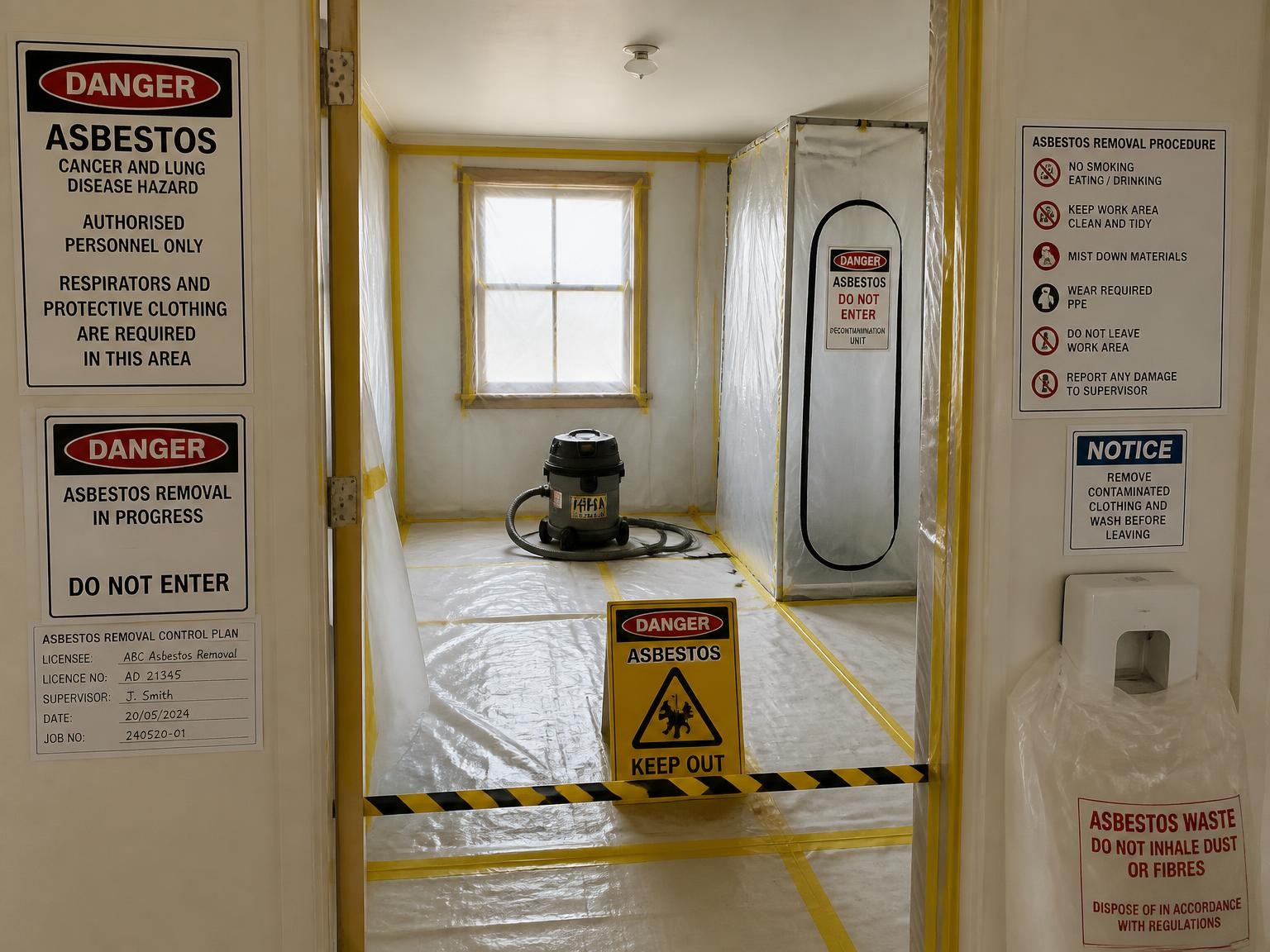
Never sand or remove suspected asbestos flooring casually
Flooring can become hazardous when it is damaged or disturbed. Breaking tiles, tearing sheet flooring, scraping adhesive, or using sanders and grinders can spread asbestos-contaminated dust beyond the immediate work area.
Keep children, pets, visitors, and unprotected workers away from the area.
Do not sweep, vacuum with an ordinary household vacuum, sand, drill, or dry-cut the flooring.
Contact a licensed asbestos removal company before continuing renovation work.
C&A Asbestos Removal uses appropriate PPE, wet methods, containment zones, and controlled work practices to reduce the risk of fibre release during residential flooring removal.
A complete asbestos flooring removal service
From the first conversation to final disposal documentation, C&A gives homeowners a clear scope of work and a calm, professional service without a call-centre handover.
Licensed professionals
Residential removal is planned and completed by a licensed asbestos removal team.
Controlled removal
Wet methods, suitable PPE, and controlled work zones are used as standard practice.
Compliant disposal
Waste is double-bagged, tracked, transported, and disposed of at licensed facilities.
Clear documentation
You receive disposal documentation and a clear record of the completed work.
How asbestos floor removal works
Every property is different. We assess the flooring, access, surrounding rooms, and disposal requirements before work begins.
Initial conversation and site assessment
Tell us what flooring is present, where it is located, and what renovation work you are planning. We can arrange an assessment to review the material, condition, access, furnishings, and the safest removal approach.
Scope, controls, and fixed-price quote
Once the scope is understood, we explain the work required and provide a clear quote. Ask us for a fixed-price quote for the agreed removal scope, so you know what is included before the job starts.
Prepare the residential work area
We establish the appropriate controlled area, restrict access, and prepare the room and surrounding surfaces. Our team plans the work to minimise disruption to the rest of your home.
Careful flooring removal
Suspected asbestos floor tiles, sheet flooring, backing, and associated materials are removed using controlled techniques and wet methods where appropriate. The team uses suitable PPE and avoids unnecessary breakage or dust generation.
Packaging, transport, and disposal
Removed materials are appropriately packaged and labelled before being transported to an EPA-licensed disposal facility. Disposal documentation is provided after the job for your records.
Final clean and handover
We complete a detailed post-removal clean within the agreed scope and leave the area tidy. Independent hygienist air monitoring can be coordinated when required for the project.
Preparing your home
Before our team arrives, we will explain any preparation required for the agreed scope. This may include clearing furniture and personal items from the room, keeping occupants away, and arranging access to the property.
Do not remove or disturb the flooring yourself before the assessment. Leaving the material in place generally makes it easier to plan controlled removal.
What affects the price?
Asbestos flooring removal costs vary according to the floor area, type and condition of the material, number of layers, adhesive, access, furniture, containment requirements, cleaning, and disposal volume.
C&A provides free, no-obligation quotes and can discuss a fixed-price quote once the removal scope has been properly assessed and agreed.
Residential asbestos flooring removal for renovation projects
We help homeowners, renovators, investors, and property sellers manage asbestos flooring before the next stage of work.
Kitchen renovations
Remove old floor tiles or sheet flooring before cabinets, joinery, and new floors are installed.
Bathroom upgrades
Manage old flooring and underlay safely where wet-area renovations expose earlier building materials.
Whole-home renovations
Coordinate staged residential removal so renovation trades can proceed with a clean, controlled site.
Property preparation
Prepare older homes for sale, development, insurance work, or a new flooring installation.
Frequently Asked Questions About Asbestos Floors
How can I tell if my floor contains asbestos?
You generally cannot confirm asbestos by appearance alone. The age of the home, type of flooring, backing, adhesive, and previous renovations can provide clues, but laboratory analysis may be required for confirmation. Do not cut, sand, scrape, or lift suspected flooring while trying to identify it. Contact C&A for an assessment and advice on the safest next step.
What types of flooring can contain asbestos?
Potential asbestos-containing flooring may include older vinyl tiles, sheet vinyl, lino backing, flooring underlay, and adhesives such as dark bitumen-style adhesive. Asbestos may also be hidden beneath carpet or newer flooring. The material must be assessed rather than identified from its appearance alone.
Can I remove asbestos floor tiles myself?
DIY asbestos flooring removal is strongly discouraged. Requirements vary between Australian states and territories, and disturbing tiles or adhesive can release hazardous fibres. A licensed asbestos removal professional has the training, equipment, controls, packaging, and disposal processes needed to manage the work safely.
Should asbestos floor tiles be wet during removal?
Wet methods are commonly used as part of controlled asbestos removal to help suppress dust and reduce the risk of airborne fibres. The correct method depends on the material, condition, adhesive, room, and applicable work controls. C&A plans the removal approach for the specific flooring at your property.
How is asbestos flooring disposed of?
Removed asbestos flooring and related waste are appropriately packaged and labelled for transport. C&A transports asbestos waste to licensed disposal facilities and provides disposal documentation after the work is complete.
How much does asbestos floor removal cost?
The price depends on the floor area, flooring type, condition, adhesive, access, containment, cleaning, and disposal requirements. C&A provides free, no-obligation quotes and can provide a fixed-price quote for the agreed scope once the property has been assessed. Call 0426 366 938 or 0473 636 666 to discuss your flooring.
Can new flooring be installed after asbestos removal?
New flooring may be installed after the asbestos removal and cleaning work has been completed, subject to the requirements of your flooring contractor and the condition of the underlying surface. We can explain what is included in the agreed removal scope and coordinate independent air monitoring when required.
Ready to remove asbestos floors safely?
Speak directly with C&A Asbestos Removal about your home, renovation plans, and flooring concerns. Get a free assessment discussion and a fixed-price quote for the agreed removal scope.
Australia-wide residential asbestos removal • Free, no-obligation quotes