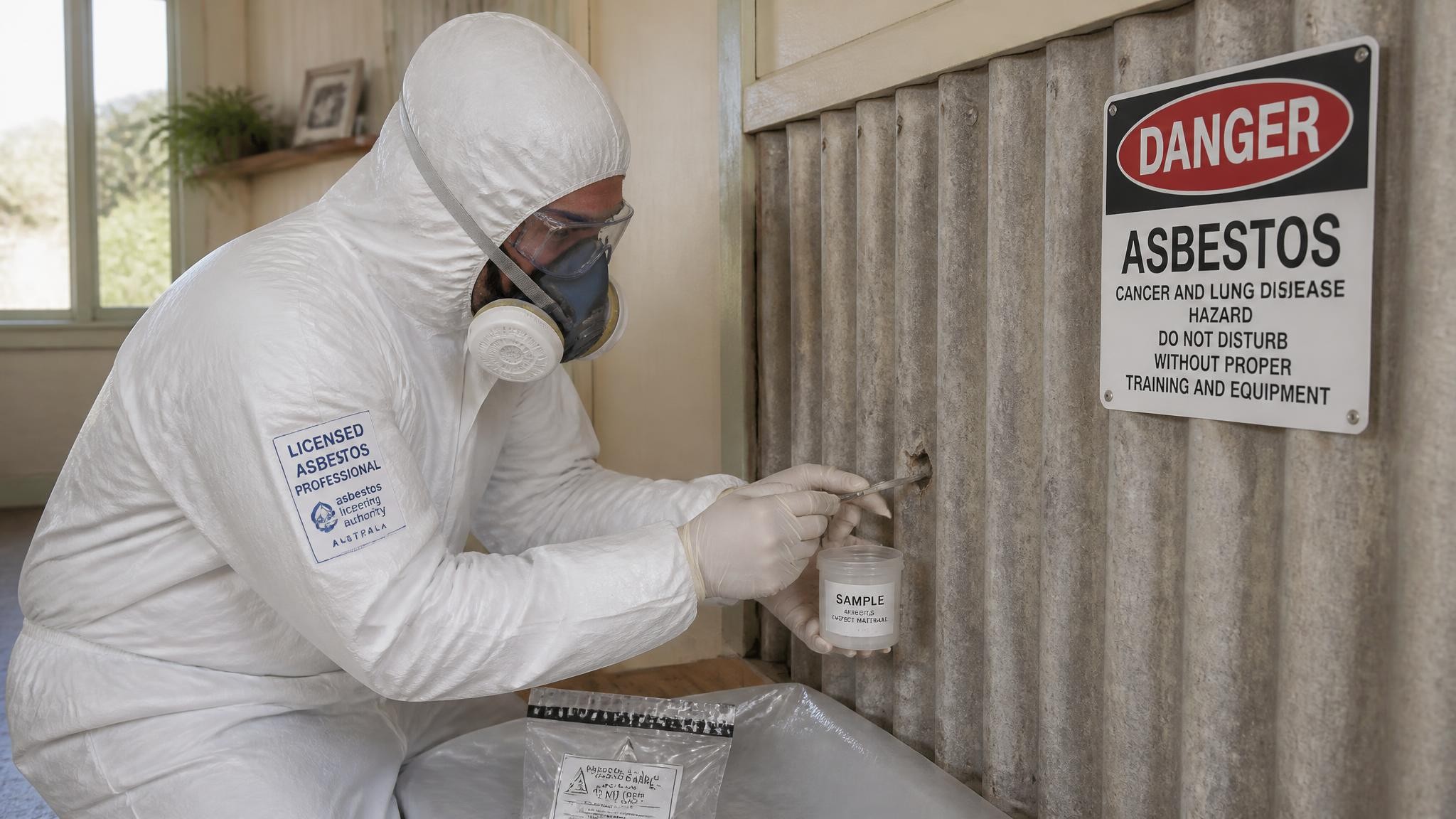
asbestos sample collection
Safe collection of suspected asbestos materials, coordinated laboratory testing, and clear next steps for homes, businesses, strata properties, and renovation projects.
Safe methods, careful handling, and laboratory coordination
Know what you are dealing with
Get suspected asbestos materials tested before work begins
Asbestos-containing materials can look similar to non-asbestos products. Fibrous cement wall sheets, roof panels, eaves, flooring, backing boards, insulation products, and other building materials may require laboratory analysis before they are disturbed.
C&A Asbestos Removal Pty Ltd provides careful asbestos sample collection for property owners, renovators, builders, property managers, and strata representatives. We assess the material, plan a controlled collection method, and coordinate delivery to an appropriately accredited laboratory for analysis.
Testing can help you make informed decisions about renovation, demolition, maintenance, property sales, and future asbestos management. It also avoids relying on appearance or assumptions about the age of a building.
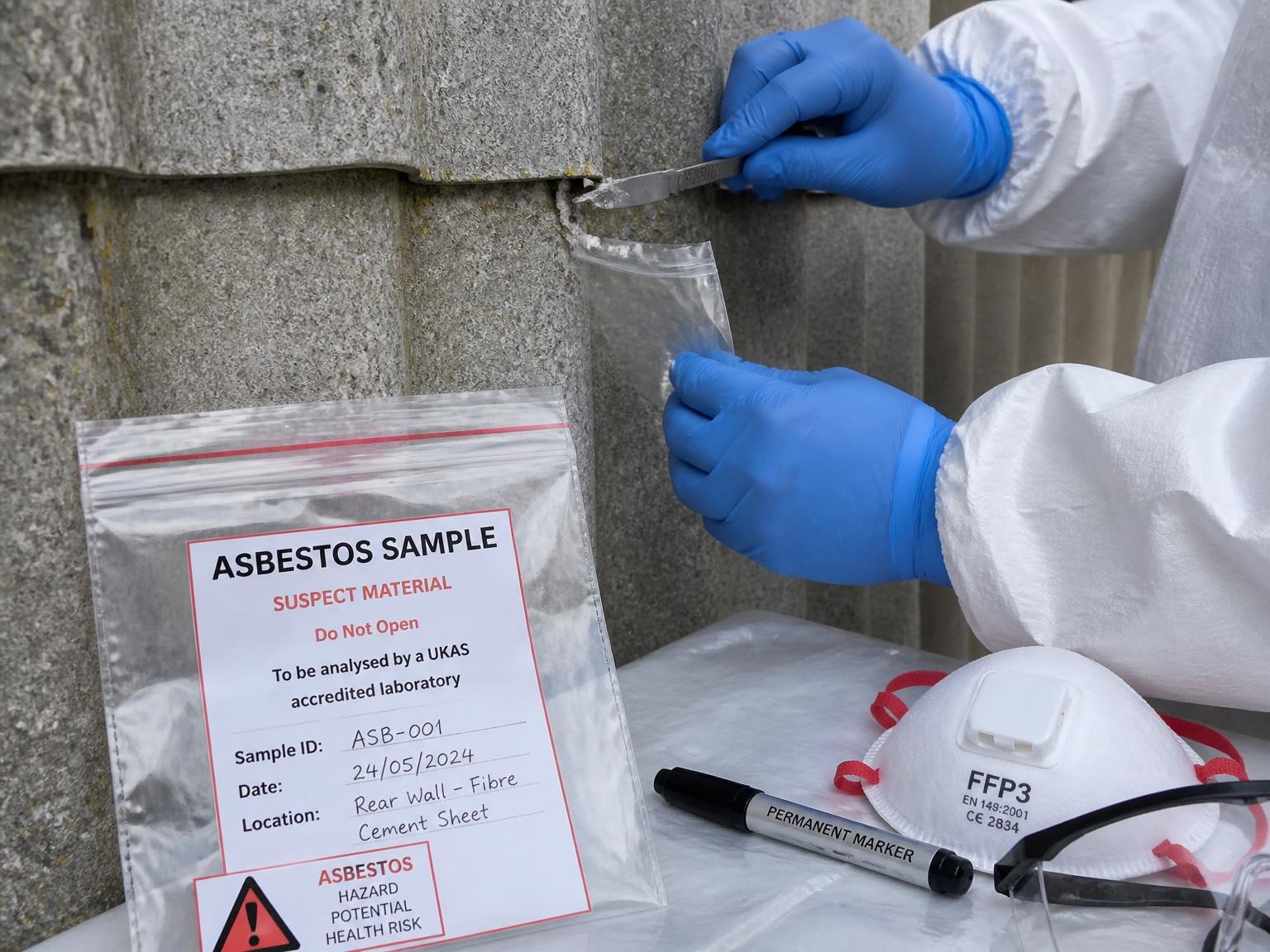
Why asbestos sample collection should be handled professionally
Collecting a sample means disturbing a material that may contain asbestos. Even a small amount of damage can create contamination if the work is not planned and controlled properly.
Controlled disturbance
Sampling is planned to minimise damage, dust, and the chance of spreading fibres through the surrounding area.
Appropriate protection
Suitable PPE, wet methods, exclusion controls, and safe handling practices are selected for the material and location.
Clear identification
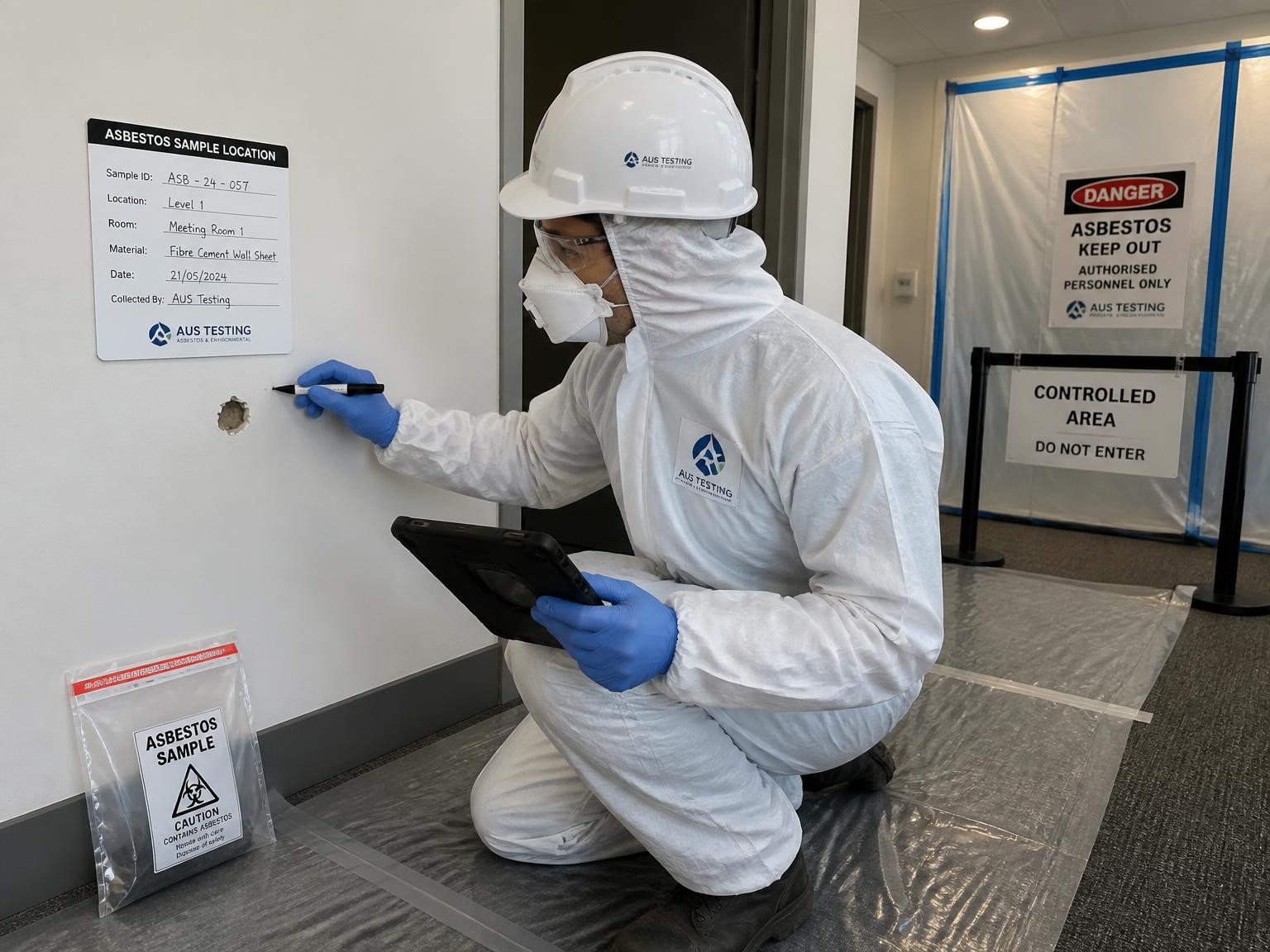
Samples are labelled and documented so the laboratory can match the result to the correct room, surface, or building material.
Useful documentation
You receive the relevant laboratory information and sampling details to support planning, compliance, and future property records.
Materials that may require asbestos sample testing
Asbestos was used in many Australian building products, especially in properties constructed or renovated before the 1990s. We can discuss suspected materials throughout residential, commercial, and strata properties, including:
Fibrous cement wall and ceiling sheets
Roof sheets, eaves, and soffits
Vinyl floor tiles and sheet flooring
Flooring adhesives and backing materials
Pipe lagging and insulation products
Moulded products and electrical components
Asbestos cement fencing and outbuildings
Suspected materials found during renovation
Do not cut, drill, sand, or break the material
If you suspect asbestos, stop work and keep people away from the area. Do not take a sample yourself using household tools or a DIY test kit. Uncontrolled sampling can release fibres and contaminate surfaces, clothing, tools, and nearby rooms.
Call C&A to discuss the material and arrange a safe sampling appointment. We can also advise whether removal, further assessment, or another control measure may be appropriate after the result is received.
Reliable analysis starts with reliable handling
Sampling, accreditation, and laboratory coordination
The person collecting a sample and the laboratory analysing it have different roles. Understanding that distinction helps you choose a service that produces useful, defensible results.
Competent collection
Safe sampling requires knowledge of asbestos risks, suitable PPE, wet sampling techniques, contamination controls, and the correct handling of suspect material. C&A is a licensed asbestos removal company and approaches each collection with safety and compliance in mind.
Appropriately accredited laboratory
Laboratory analysis should be performed by a laboratory with suitable accreditation and scope for asbestos identification. In Australia, this commonly means confirming that the facility is NATA-accredited for the relevant asbestos testing method.
Traceable coordination
Samples need to be identified, packaged, transported, and matched to the correct location. We coordinate the process so you know what was sampled, where it came from, and when the laboratory result is available.
What does accreditation mean?
Accreditation applies to the laboratory's technical competence and the specific testing activities included within its scope. It is not simply a general claim that every material or test is covered. When arranging asbestos analysis, it is sensible to confirm that the laboratory is accredited for the relevant asbestos identification method.
C&A can coordinate with an appropriately accredited laboratory and provide the available laboratory documentation with the result. Requirements for asbestos sampling, assessment, removal, air monitoring, and reporting can vary between Australian states and territories, so we will discuss the circumstances of your project before the appointment.
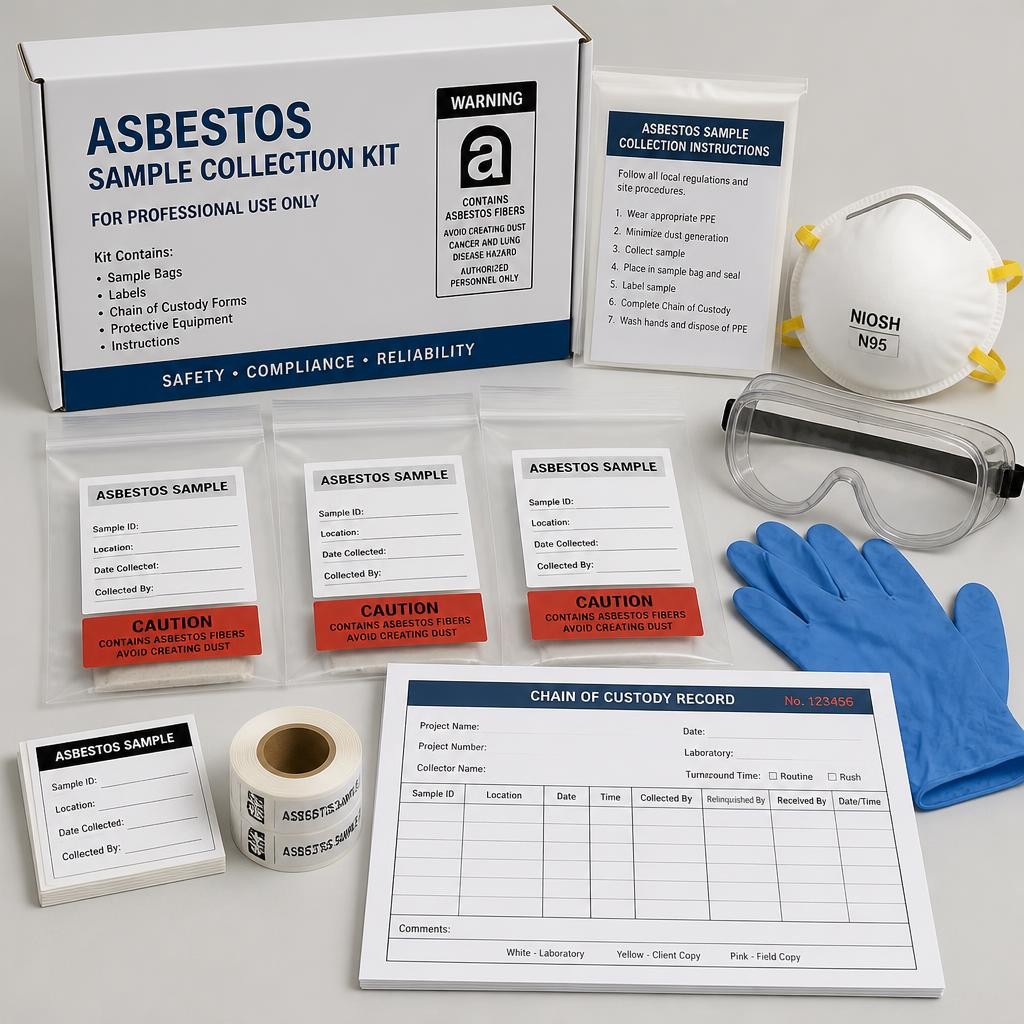
How our asbestos sample collection service works
Discuss the suspected material
Call or email C&A with the property location, age, material type, and reason for testing. Photographs can help us understand access and identify what may need to be sampled.
Plan the appointment
We arrange a suitable time and confirm any site requirements. Occupants, workers, pets, and nearby activities may need to be kept clear while sampling takes place.
Collect the sample safely
The suspected material is carefully disturbed using appropriate controls. The sample is sealed, labelled, and the collection point is managed to reduce the risk of loose debris or contamination.
Coordinate laboratory analysis
The sample is prepared for transport to an appropriately accredited laboratory. We keep the sample details aligned with the location and material description supplied for testing.
Receive the result and discuss next steps
Once the laboratory report is available, we can explain what the result means for your planned work and discuss safe removal or asbestos management options where required.
When should you book asbestos sample collection?
Testing is often useful when the material cannot be confidently identified from records or appearance alone.
Before renovating an older home
Kitchen, bathroom, laundry, flooring, wall, ceiling, and roofing work can disturb hidden asbestos-containing materials.
Before demolition or alterations
Builders, developers, and property owners may need to identify suspect materials before demolition, extensions, or structural changes.
For commercial and strata properties
Testing can support asbestos registers, maintenance planning, tenancy works, and risk management across offices and shared buildings.
During a property sale or purchase
A laboratory report may provide useful information when a buyer, seller, insurer, or project consultant needs material identification.
Before repairs or maintenance
Drilling, replacing fixtures, repairing roofs, or working around older linings may require confirmation of the material first.
When material identity is uncertain
If you are unsure whether a panel, tile, sheet, adhesive, or insulation product contains asbestos, professional testing is safer than guessing.
What an asbestos laboratory report can tell you
A sample result applies to the material and location collected. It should be kept with your property records and considered alongside the condition, extent, and accessibility of the material.
A result may help identify
- Whether asbestos was detected in the submitted sample
- The type of material that was analysed
- Information to support removal or management planning
- Documentation for your renovation or property file
Important limitations
- One sample does not automatically represent every similar-looking material on a property
- A visual inspection alone cannot reliably confirm whether asbestos is present
- A material should be treated as suspect until appropriate testing or assessment is completed
- The report does not replace a site-specific removal control plan or risk assessment
A direct, practical service
Clear asbestos testing support without the guesswork
C&A Asbestos Removal provides a calm and professional point of contact from the first call through to laboratory coordination. You speak directly with the team rather than a call centre, and we explain what needs to happen before any suspected material is disturbed.
Direct communication
Call the team directly to discuss the material, property, and reason for testing.
Safety-first planning
Sampling methods are selected to suit the material, location, access, and surrounding conditions.
End-to-end asbestos support
If asbestos is identified, we can discuss safe removal, containment, disposal, and post-removal requirements.
Frequently Asked Questions About Asbestos Sample Collection
What is asbestos sample collection?
Asbestos sample collection is the controlled removal of a small piece of a suspected building material so it can be analysed by a suitable laboratory. The sample should be collected, sealed, labelled, and transported in a way that minimises fibre release and keeps the result linked to the correct location.
Can I collect an asbestos sample myself?
DIY sampling is not recommended. Cutting, drilling, breaking, or scraping a suspect material can release asbestos fibres and contaminate the area. Requirements also vary across Australia depending on the work and location. Contact a competent, licensed asbestos professional to arrange safe sampling.
Does C&A test the sample in its own laboratory?
Laboratory analysis is coordinated with an appropriately accredited laboratory. C&A focuses on safe collection, accurate sample identification, careful handling, and coordinating the sample submission and result for your project.
What does NATA accreditation mean for asbestos testing?
NATA accreditation indicates that a laboratory has been assessed for technical competence within a defined scope of testing. For asbestos sample analysis, you should confirm that the laboratory's accreditation covers the relevant asbestos identification method. Accreditation relates to the laboratory and its approved scope, not automatically to every person or company collecting samples.
How many samples will my property need?
The number of samples depends on the size of the property, the number of different materials, visible differences in products, the planned work, and the purpose of the inspection. One result may not represent every similar-looking material, so C&A will discuss the areas that may need sampling before the appointment.
How long does asbestos sample testing take?
Turnaround depends on the laboratory, testing method, number of samples, and whether standard or urgent analysis is requested. We can discuss expected timing when the sampling appointment is arranged. Do not begin work on suspect materials while waiting for the result.
What happens if asbestos is detected?
The next step depends on the material's condition, location, accessibility, and the work you plan to undertake. C&A can discuss options such as leaving the material undisturbed under an asbestos management plan or arranging licensed removal, containment, transport, and disposal where removal is required.
Do you provide asbestos sample collection for commercial and strata properties?
Yes. C&A supports commercial property managers, business owners, builders, and strata representatives with sample collection and laboratory coordination. We can plan access and communication around occupants and operating requirements to help minimise disruption.
Book an asbestos sampling appointment
Speak directly with C&A Asbestos Removal about suspected materials in your home, business, strata property, or renovation site. We offer clear advice and no-obligation quotes.
Or email cheataanny@gmail.com
Category: Asbestos Testing