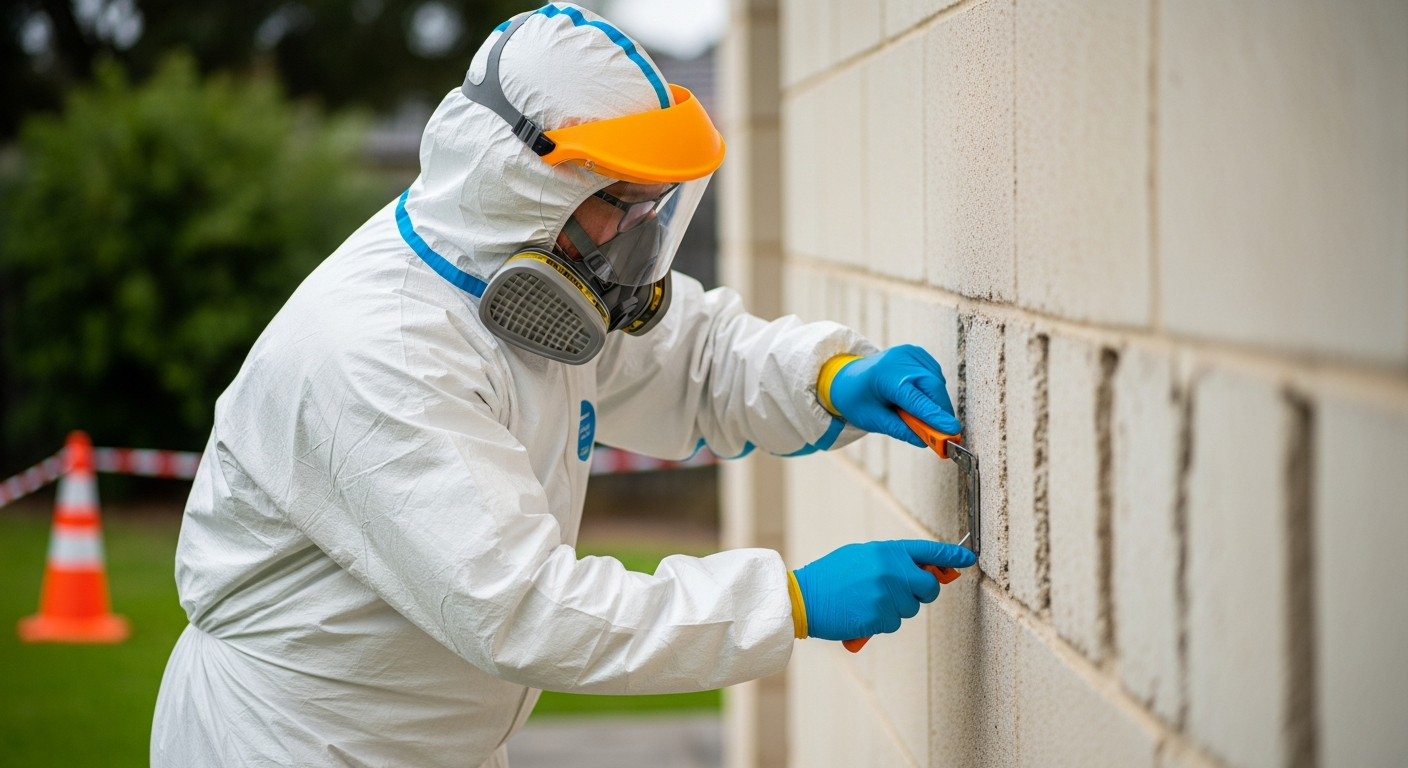
asbestos sampling requirements
What you need to know about bulk sampling protocols, safe handling, lab testing and legal compliance in Australia
C&A Asbestos Removal provides expert advice and practical support for asbestos sampling. We help homeowners, renovators and property managers meet regulatory requirements and ensure samples are collected, packaged and sent to accredited labs correctly.
Licensed advice and safe sampling in line with Safe Work Australia guidance
Why asbestos sampling matters
Identifying asbestos-containing material (ACM) is the first step in managing asbestos risk. Proper sampling confirms whether materials contain asbestos and determines the right risk controls, removal methods, or clearance procedures.
Incorrect sampling can contaminate a site, invalidate lab results, or expose occupants and contractors to airborne fibres. Follow recognised bulk sampling protocols and use accredited laboratories to ensure legally defensible results.
Quick sampling checklist
- Use PPE and damp methods to suppress dust
- Minimise the number and size of samples
- Label and seal samples immediately
- Chain of custody and lab accreditation are essential
- Record location, condition, and material type
- Avoid disturbing suspect materials—get advice
- Keep samples secure during transport
- Retain lab reports for compliance and sale/safety records
Bulk sampling protocols — step by step
1. Preliminary assessment and planning
Before any sampling, conduct a visual inspection to identify suspect materials and assess access, hazards and contamination risk. Limit sampling to the minimum number needed to achieve a reliable result.
Document the material location, condition (intact, friable, damaged), and likely type (e.g., fibrous cement sheeting, vinyl floor backing, insulation) before collecting samples.
2. Personal protective equipment and controls
Wear appropriate PPE — disposable coveralls, P2/P3 respiratory protection, gloves and eye protection. Use dampening/wet methods to suppress dust and perform sampling with hand tools to reduce disturbance.
3. Taking bulk samples correctly
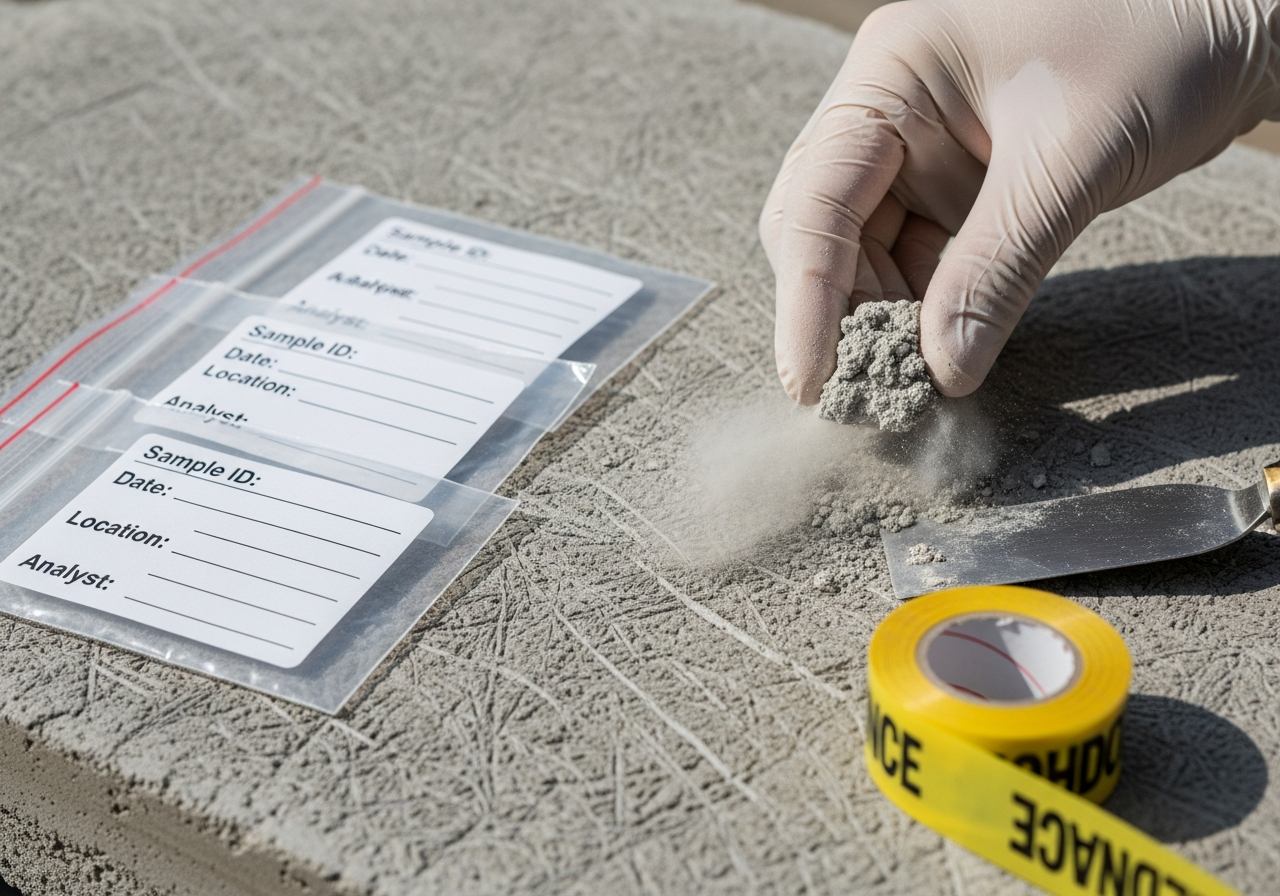
Collect representative small pieces (usually a few square centimetres or grams) from suspect materials. Avoid shredding or sanding. Seal each sample in a labelled, secure bag or container immediately.
- Take multiple samples if the material varies across locations.
- Note clear photos and sample IDs so lab results can be mapped to exact positions.
- Where accessible, sample behind coverings (e.g., pull back linings) to avoid exterior contamination.
4. Packaging, labelling & chain of custody
Place each sample into a leak-proof bag or rigid container and label with a unique ID, date, location and collector name. Complete chain-of-custody forms showing transfer history — labs require this for accreditation and defensible reporting.
5. Transport and lab submission
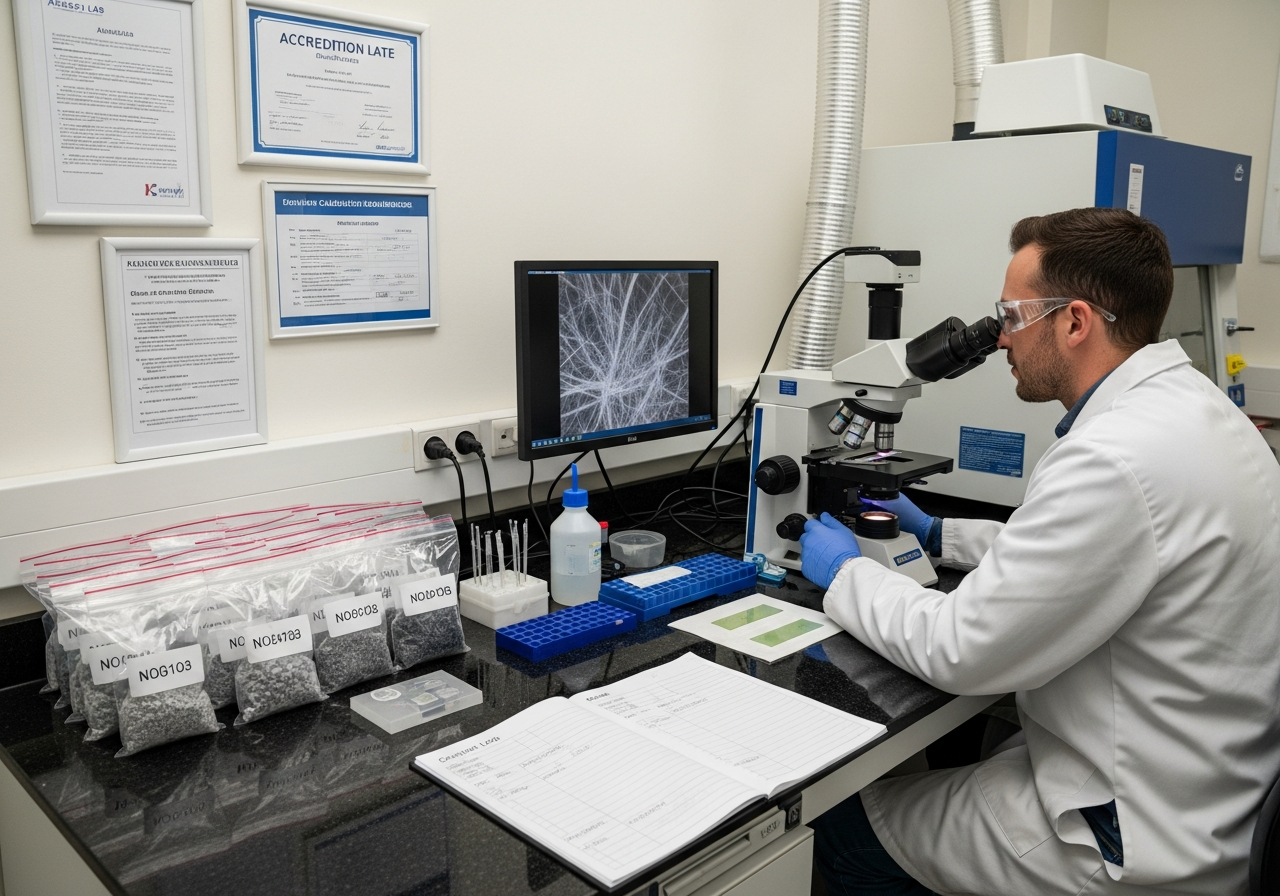
Keep samples secure and avoid impact during transport. Choose an NATA-accredited laboratory (or equivalent) and advise them of sample type and any special instructions. Book tests in advance to avoid delays.
Laboratory coordination and test types
Selecting the right laboratory and test method ensures reliable identification. Common lab techniques include Polarised Light Microscopy (PLM) for bulk material identification and, where required, dispersion staining or electron microscopy for more complex samples.
When you work with C&A we:
- Coordinate with NATA-accredited labs experienced in asbestos bulk sample analysis
- Ensure chain-of-custody forms accompany every submission
- Request clear, actionable reports stating whether asbestos is present and, if possible, the fibre type
- Advise on next steps — management, removal, or clearance testing — based on results
Turnaround times vary by lab and sample volume — typically 3–7 business days for routine PLM, with faster options available for urgent jobs.
Regulatory compliance & documentation
In Australia asbestos sampling and subsequent actions must align with Safe Work Australia guidance, local WHS legislation, and state EPA requirements. Key compliance points:
- Only competent persons should collect samples and interpret results.
- Maintain chain-of-custody and lab reports as part of site records — essential for property sales, renovations and legal compliance.
- Do not use sampling as a substitute for safe removal where material is damaged or friable — sampling still poses risk and should be minimised.
- After positive identification, follow appropriate removal, containment or management protocols and ensure licensed disposal of waste.
C&A Asbestos Removal follows Safe Work Australia's Code of Practice and will provide written advice and documentation after sampling to support your next steps.
Cost & timing
Sampling costs depend on site access, number of samples and urgency. Typical factors affecting price:
- Site travel and access complexity
- Number of samples required to characterise material
- Laboratory test type and turnaround time
- Any follow-up advice or removal recommendations
Call us for a clear, no-obligation quote. We can often attend same or next day in metropolitan areas and coordinate fast lab turnaround when required.
How C&A can help with asbestos sampling
Direct contact — no call centre
Speak directly to our experienced team on mobile for fast advice and booking.
Competent sampling
We apply industry best-practice sampling protocols and minimise disruption and contamination risk.
Lab coordination & reporting
We submit to NATA-accredited labs with full chain-of-custody and deliver clear, actionable reports.
C&A Asbestos Removal is licensed to advise and work on asbestos issues across Australia. We combine practical sampling with compliant documentation so you can proceed with renovations, sales or remediation confidently.
Contact: 0426 366 938 • Alternate: 0473 636 666
Email: cheataanny@gmail.com
Frequently Asked Questions
Who can legally collect asbestos bulk samples?
Sampling should be done by a competent person trained in safe asbestos handling and PPE procedures. In many cases, especially where materials are friable or access is difficult, engage a licensed asbestos professional.
How many samples do I need?
Sample numbers depend on material homogeneity and site size. Labs and guidance documents often recommend multiple samples for materials that vary by location or condition. We advise the minimum representative sampling to limit disturbance while ensuring reliable results.
What tests will the lab perform?
Routine identification uses Polarised Light Microscopy (PLM). For complex or low-fibre samples, labs may use electron microscopy or other specialised techniques. Always check that the lab is accredited for asbestos bulk analysis.
Can I sample myself to save money?
DIY sampling is not recommended. Incorrect technique or poor packaging can contaminate the site and invalidate results. For small, non-friable materials some homeowners choose DIY with caution, but the safest approach is to engage a competent professional.
Need help with asbestos sampling requirements?
Get practical, compliant sampling carried out by experienced professionals — we handle collection, lab liaison and reporting so you can proceed safely.
Category: Asbestos Testing