asbestos assessments
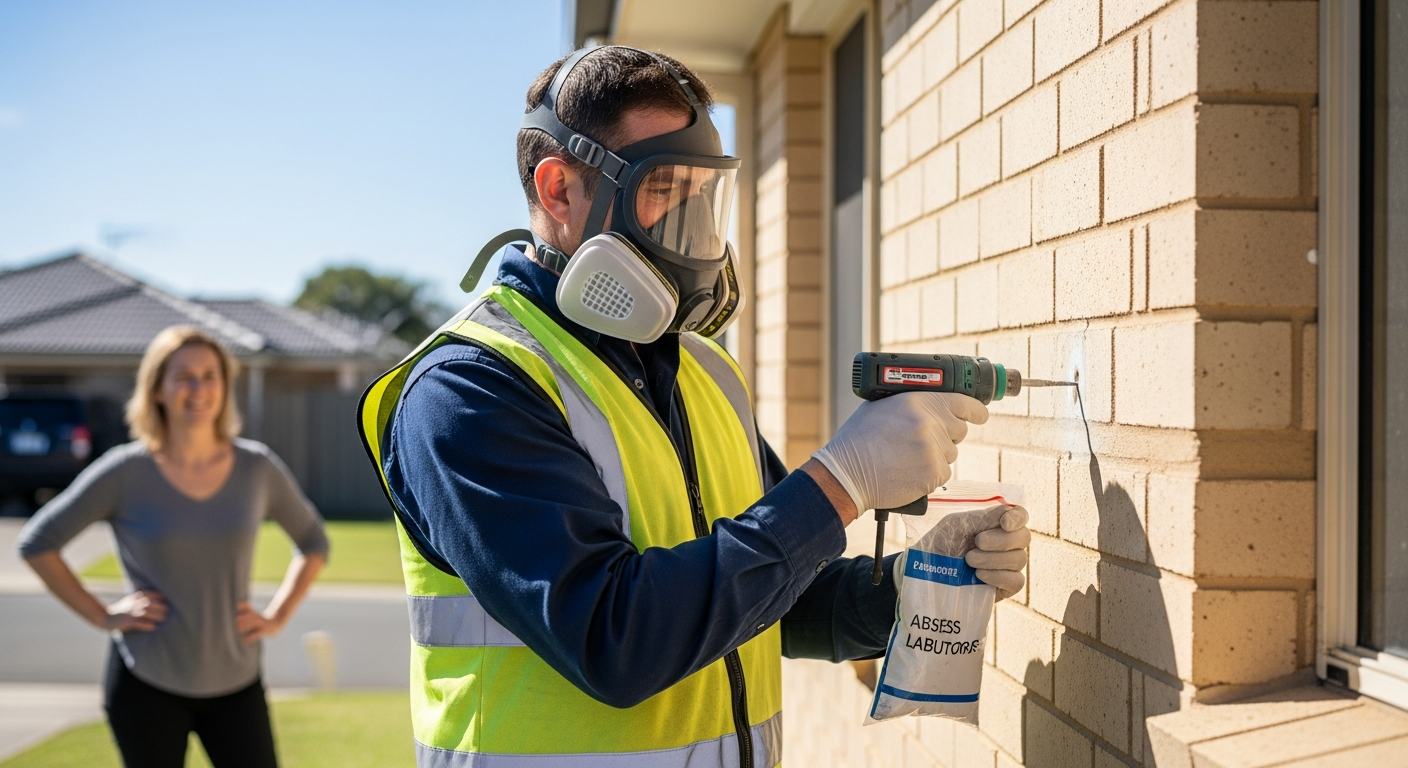
Bulk sampling, laboratory analysis and air monitoring to confirm asbestos presence and guide safe removal.
C&A Asbestos Removal provides licensed, accredited asbestos testing across Australia — fast site assessments, clear documentation and practical advice for homeowners, renovators and managers.
Licensed testing, clear reports and guidance you can trust
Why professional asbestos testing is essential
A visual inspection alone cannot reliably confirm whether a material contains asbestos. Misidentifying materials can lead to unnecessary work — or worse, unsafe disturbance of asbestos-containing material (ACM). Professional testing gives you certainty so you can plan safe, compliant remediation or leave non-friable materials undisturbed.
- Accurate identification via laboratory analysis
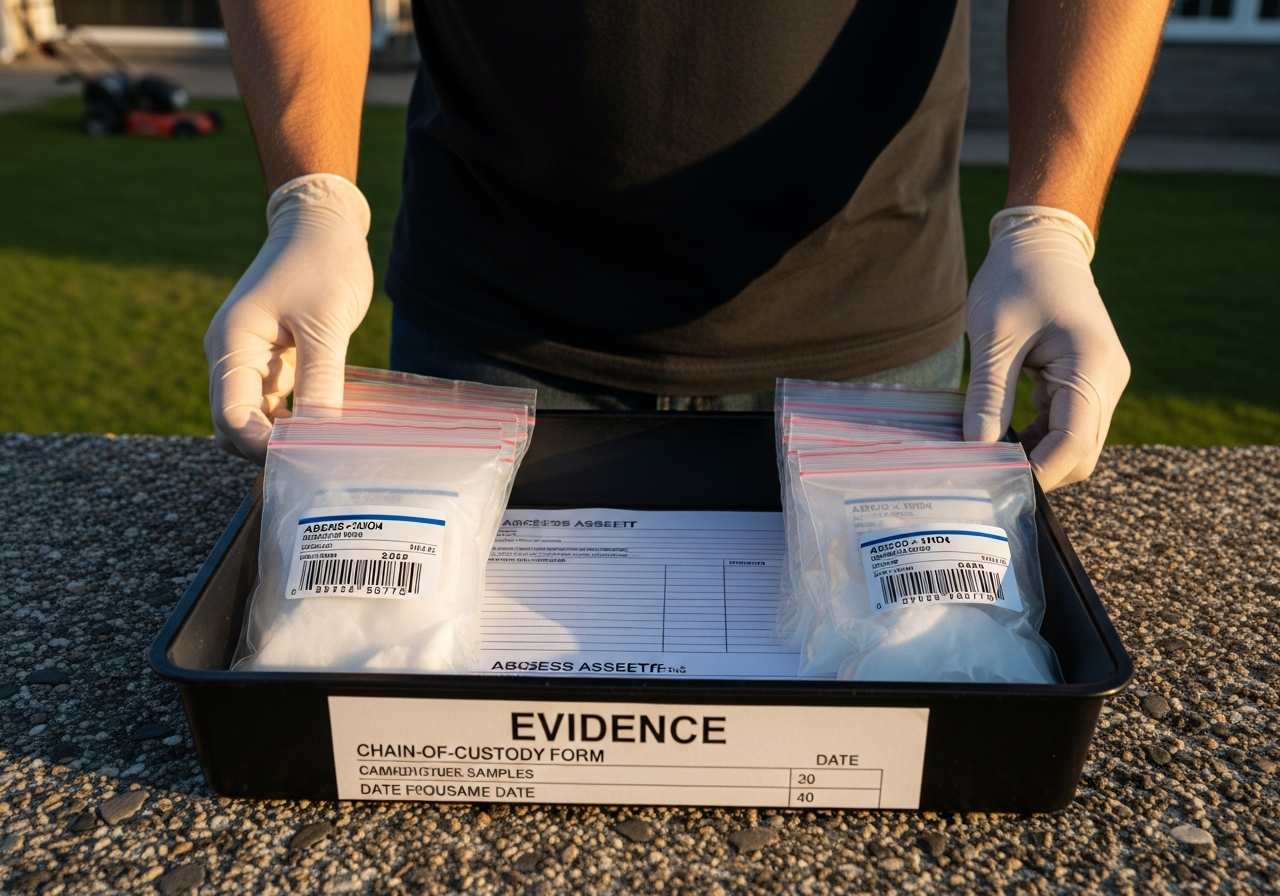
- Detailed reports and chain-of-custody documentation
- Informed advice on next steps — removal, encapsulation or monitoring
Bulk sampling and air monitoring — clear answers, compliant results
We provide tailored testing packages depending on your situation: single-sample confirmation for suspected materials, pre‑renovation surveys, or comprehensive air monitoring during and after removal.
Bulk sampling
We collect representative bulk samples from suspect materials using safe, contained methods. Samples are double-bagged, labelled and sent to NATA-accredited laboratories for fibre identification.
Includes chain-of-custody and a clear lab report showing whether asbestos is present and what type (e.g. chrysotile, crocidolite, amosite).
- Safe on-site sampling by trained technicians
- Samples submitted to accredited labs
- Written report and recommendations
Air monitoring
Air monitoring measures asbestos fibre levels to ensure a site is safe. We conduct baseline sampling, area monitoring during disturbance or removal, and clearance testing after work is complete.
Monitoring is performed using calibrated equipment and industry‑standard sampling protocols — results inform safe work and re‑occupation decisions.
- Baseline and task-based monitoring
- Clearance testing after removal
- Results and interpretation in plain language
How an asbestos assessment works — step by step
Initial call and site assessment
Tell us where the suspect material is and any access constraints. We’ll advise if sampling is required and arrange a visit with a licensed assessor.
Safe sampling and chain-of-custody
Our technicians use safe methods to collect bulk samples, seal and label them, and document chain-of-custody before sending to an accredited lab.
Laboratory analysis and reporting
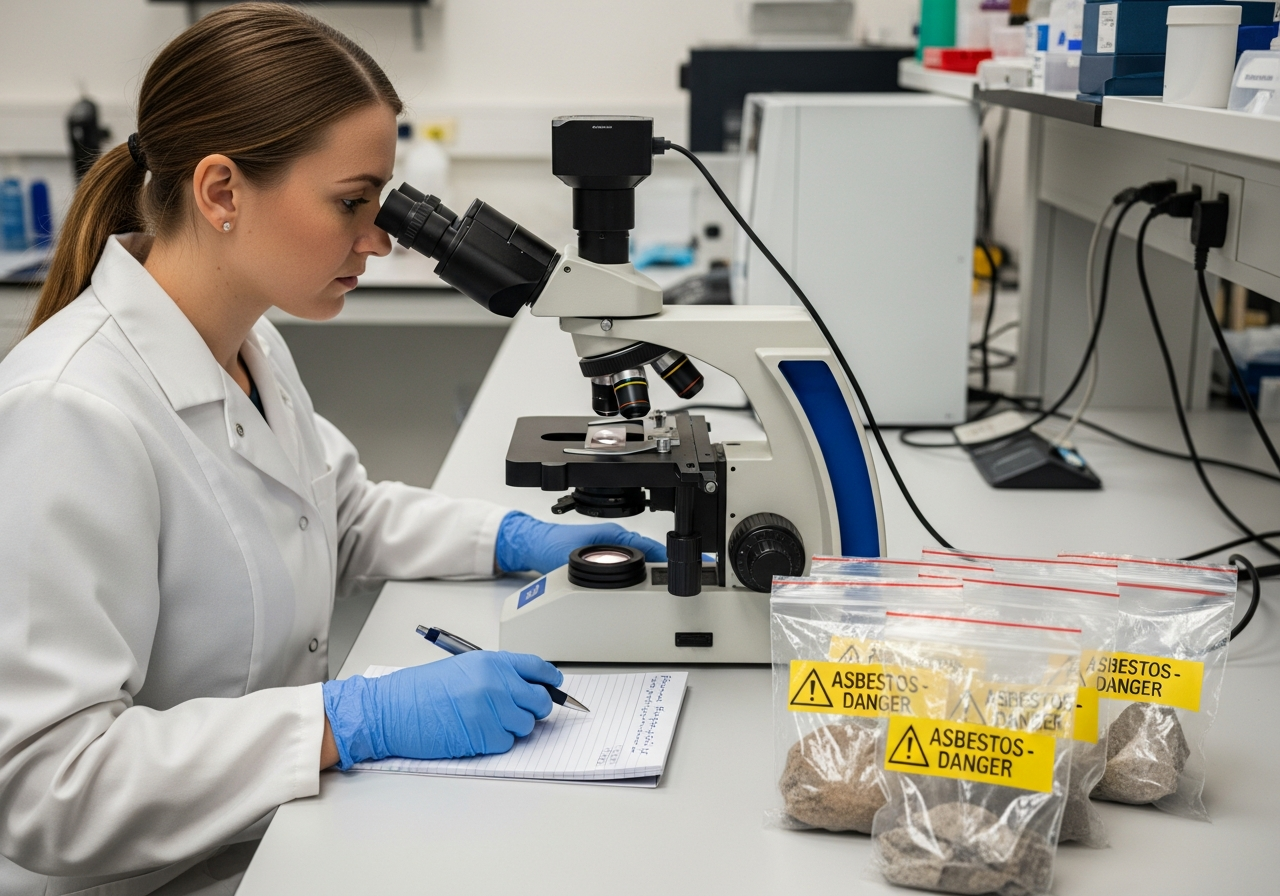
Accredited microscopy confirms whether asbestos fibres are present and identifies type and approximate concentration. We deliver a clear report with photos and recommended controls.
Air monitoring & clearance (if required)
If disturbance or removal is planned, we implement monitoring during works and perform clearance testing to confirm safe re‑occupation.
Technical overview: bulk sampling vs air monitoring
Bulk sampling (what it is)
Bulk sampling is the collection of small material samples from suspect surfaces (e.g. sheeting, backing boards, textured coatings) for laboratory identification. Samples are collected under controlled conditions to avoid fibre release and preserve sample integrity.
Laboratory analysis (how results are reported)
NATA-accredited labs use microscopy to identify asbestos fibres and may report fibre type. Reports include photos, sample IDs and a definitive statement on presence or absence of asbestos. These reports form the basis for safe work planning and legal compliance.
Air monitoring (when and why)
Air monitoring measures airborne asbestos fibre concentrations. Common uses:
- Baseline testing before works
- Real-time monitoring during disturbance or removal
- Clearance testing after removal to confirm safe re‑occupation
Do-it-yourself sampling — a caution
DIY sampling often risks fibre release and can invalidate sample results (contamination). We strongly recommend licensed technicians for any sampling — particularly where renovation or demolition is planned.
Frequently Asked Questions
What is the difference between bulk sampling and air monitoring?
Bulk sampling collects material for laboratory identification; air monitoring measures airborne fibre concentrations. Both are complementary — sampling confirms material content, monitoring ensures air safety during and after disturbance.
How long do test results take?
Typical turnaround for accredited microscopy is 2–5 business days, depending on lab workload and test complexity. We can arrange expedited analysis if your project is time-sensitive.
Do I need a test before renovating?
Yes. If your renovation will disturb suspect materials, testing is strongly recommended to avoid accidental fibre release and to ensure legal compliance. Testing informs whether licensed removal or controlled methods are required.
Are your tests accepted by regulators and removal contractors?
Yes. We use accredited laboratories and provide full chain-of-custody and written reports suitable for regulators and licensed removal contractors. Our documentation supports safe, compliant decision-making.
Trusted across Australia — what you get
- Direct contact with our team — no call centres (0426 366 938 / 0473 636 666)
- Clear reports, chain-of-custody and practical recommendations
- If removal is needed we work with licensed removal teams to minimise disruption and ensure legal disposal
- Free, no-obligation quotes for testing and any follow-up removal
Book an asbestos assessment — fast, licensed and documented
Whether it’s a single suspect sample or full air monitoring before a demolition, C&A Asbestos Removal can arrange testing and provide a clear, compliant pathway forward.
We service homes, strata, developers and commercial sites Australia-wide. Email: cheataanny@gmail.com
Category: Asbestos Testing