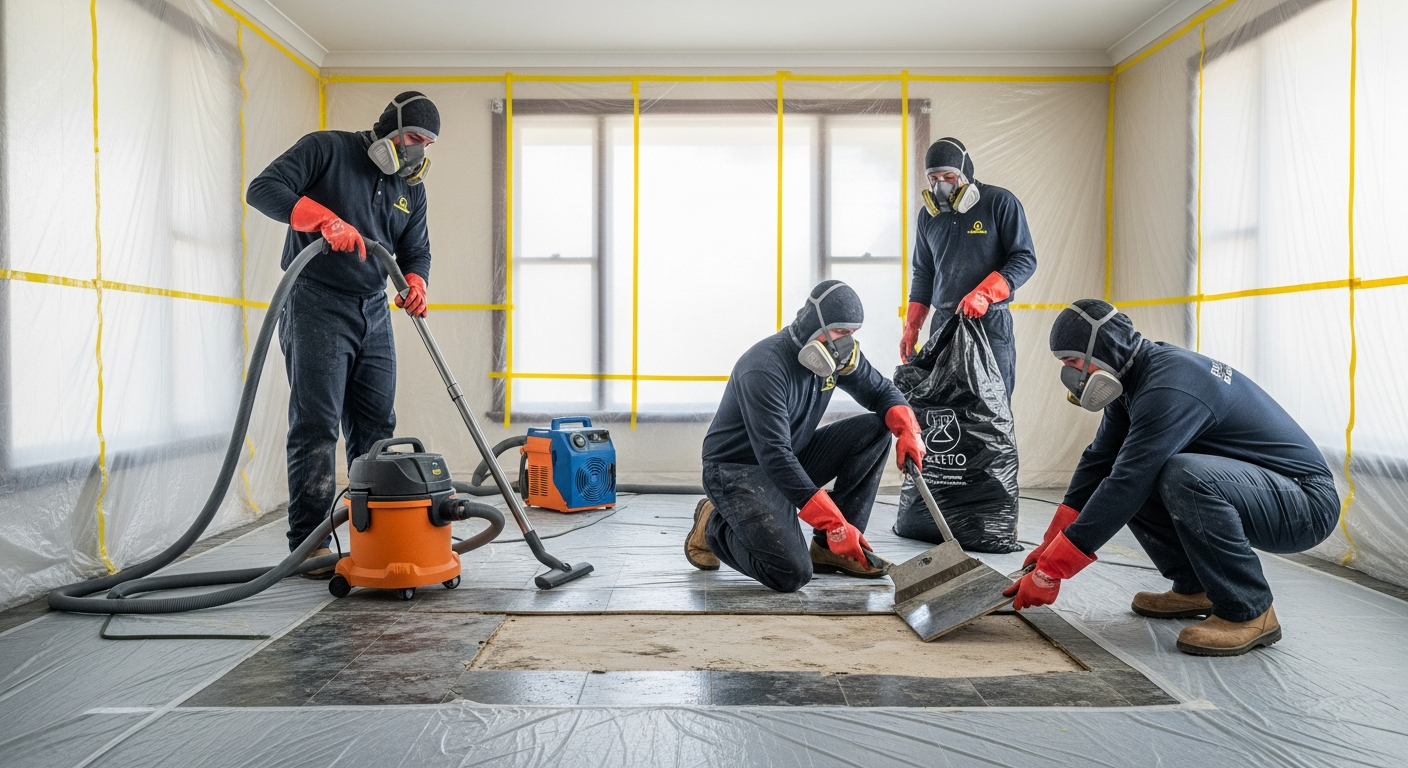
cost to remove asbestos flooring
Indicative pricing, common floor types, removal methods and what affects your quote — clear info from licensed removal specialists.
Free, no‑obligation on‑site quotes across Australia. We follow Safe Work Australia guidance, use appropriate PPE and ensure EPA‑compliant disposal.
Licensed removal, clear documentation, EPA disposal.
Why the cost to remove asbestos flooring varies
Pricing depends on the type of asbestos product, how it's bonded to the substrate, the condition of the material, and the site access. Some floor coverings are bonded and non‑friable (for example vinyl asbestos tiles), while damaged underlay or sanding dust can create higher risk and extra work.
C&A provides a tailored quote after inspection or testing (if required). We always explain the cost drivers and recommend the safest, most cost‑effective option for your project.
Indicative price guide (Australia) — removal only
These ranges are indicative to help planning. Exact pricing depends on inspection, testing, accessibility and local disposal fees. All quotes are no‑obligation and include disposal documentation.
Inspection & testing
Sampling and lab analysis (where required) to confirm asbestos content.
Typical cost: $200 – $450
Bonded asbestos flooring (vinyl tiles & sheet)
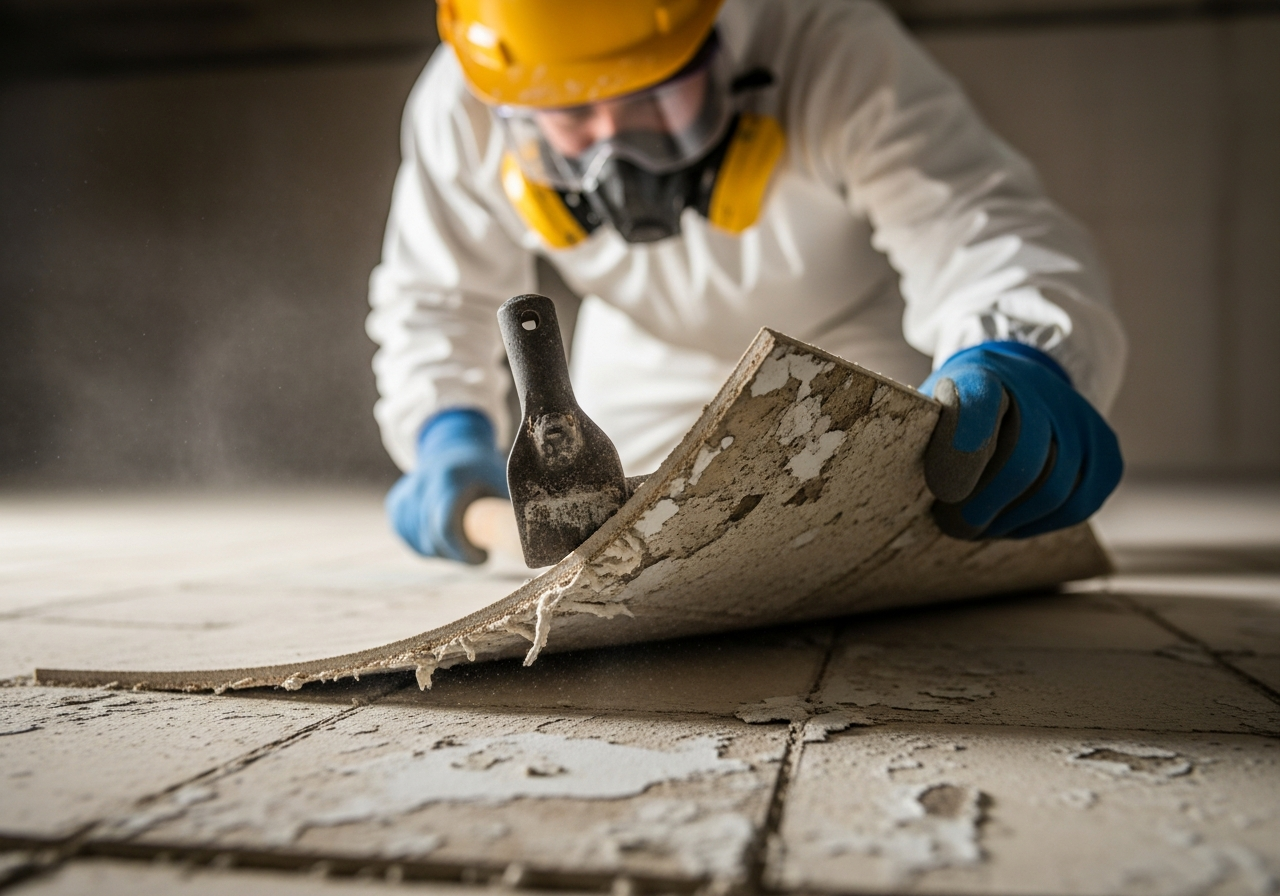
If tiles/sheet are intact, removal is usually classed as bonded/non‑friable, but still requires careful handling and licensed removal in many jurisdictions.
Typical cost: $35 – $120 per m²
Deteriorated flooring, friable underlay or adhesive
When the underlay or adhesive is damaged, or removal creates dust, extra containment, HEPA vacs and possibly air monitoring are required.
Typical cost: $120 – $350+ per m²
Minimums & small job surcharges
Small jobs often attract a minimum site fee to cover travel, set‑up, required PPE and disposal loads.
Typical minimum: $800 – $2,000 (depends on location)
Note: Replacement floor finishes, structural repairs or restoration are quoted separately. C&A will provide a clear, itemised quote showing removal, disposal and any optional air monitoring.
Common asbestos flooring types we remove
Understanding the product type helps predict removal complexity and cost.
Vinyl asbestos tiles (VAT)
Common in mid‑20th century homes — typically 9" or 12" tiles. Often bonded; removal aims to lift whole tiles with minimal breakage.
Sheet vinyl with asbestos backing
Long sheet vinyl can have an asbestos backing layer or adhesive that requires careful separation and removal.
Adhesives & underlay
Old mastics and underlays sometimes contain asbestos or create dust during removal — these increase the scope and cost.
Cement backing & subfloor materials
Some floors have cementitious backing boards containing asbestos — removal can require more mechanical work and disposal handling.
Encapsulation (covering in place)
In some situations, encapsulation or over‑floor solutions are considered — usually lower upfront cost but not suitable for all scenarios.
Friable residues & sanding dust
If sanding or deterioration has made material friable, specialised containment and air monitoring become necessary — this is the highest cost category.
How asbestos flooring removal works
Inspect & test
We confirm the product type with visual inspection and, if required, lab testing. This determines the removal classification and controls needed.
Plan and isolate
Set up containment, negative pressure units if needed, and prepare waste handling routes to prevent cross‑contamination.
Careful removal
Bonded materials are removed in whole pieces where possible using low‑dust methods; friable material may require wetting, full containment and specialist techniques.
Double bag & dispose
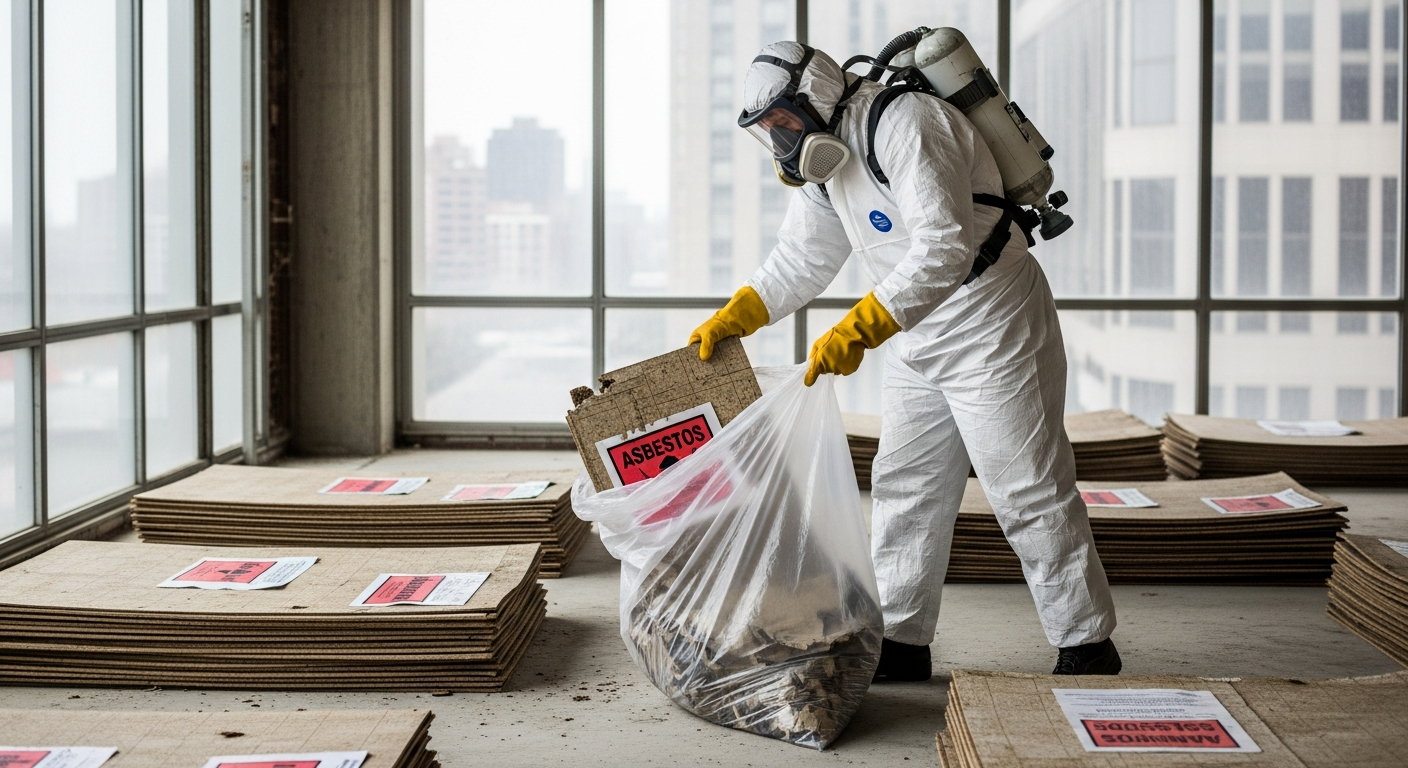
Waste is double‑bagged, labelled and transported to EPA‑licensed facilities. You receive full disposal documentation on completion.
Optional clearance verification
If required for tenants, insurance or sale, we coordinate post‑removal cleaning and independent air monitoring/clearance with a hygienist.
What affects the cost
Area size & quantity
Larger areas often reduce the per‑m² rate; small jobs can attract minimum fees.
Access & logistics
Tight access, multiple levels or need for protective walkways increase time and cost.
Condition & contamination
Broken tiles, loose dust or contaminated subfloors require containment and higher controls.
Disposal & travel
Regional transport distances, EPA disposal rates and waste volume all affect the final price.
We itemise these factors in your quote so you can see where cost is allocated.
Frequently Asked Questions
How much does it cost to remove vinyl asbestos tiles?
Vinyl asbestos tiles typically fall in the bonded/non‑friable category. Indicative removal pricing is often between $35–$120 per m² depending on access, tile condition and whether adhesives or underlay also need removal. Small jobs may incur minimum fees.
Do I need a licensed removalist to remove asbestos flooring?
Regulations vary by state and by the type/amount of asbestos. In many cases, licensed removal is required or strongly recommended. C&A will advise on legal requirements during inspection and include any licensing or testing costs in your quote.
Can asbestos flooring be left in place and covered?
In some situations, encapsulation or over‑flooring can be a lower‑cost option, but it must be suitable for the material and future use. Encapsulation does not remove the hazard and may not be acceptable for sale or major renovations. We'll discuss options during inspection.
Do you provide disposal paperwork and clearance certificates?
Yes. Every job includes waste tracking and EPA disposal documentation. If clearance testing is required, we can coordinate independent hygienist air monitoring and provide clearance reports as part of your quote.
Enquire about the cost to remove asbestos flooring
Fast, friendly advice and a clear, itemised quote. We answer questions about testing, removal methods and disposal so you can plan with confidence.
Or email cheataanny@gmail.com — available Australia‑wide.
Category: Asbestos Removal