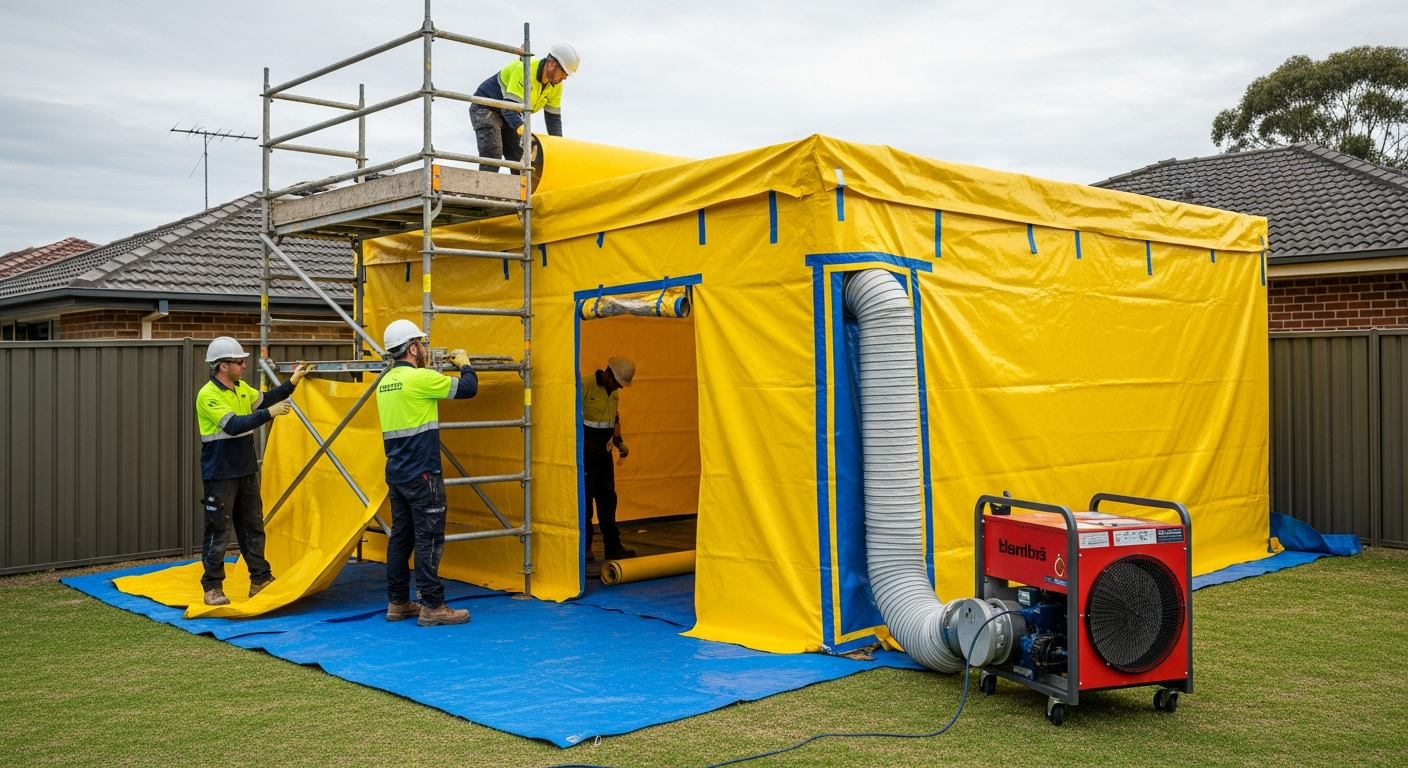
containing asbestos
How C&A Asbestos Removal contains hazardous materials safely — sealants, negative pressure systems, PPE and compliant disposal.
Licensed, insured and compliant with Safe Work Australia guidance
Why containment is essential
Asbestos fibres are dangerous when airborne. Proper containment prevents fibres spreading beyond the work area, protects occupants and neighbours, and ensures removal meets legal and health standards.
C&A uses a layered control approach: planning, engineering controls (sealants, enclosures, negative pressure), strict PPE and decontamination procedures, and licensed disposal to eliminate risk from start to finish.
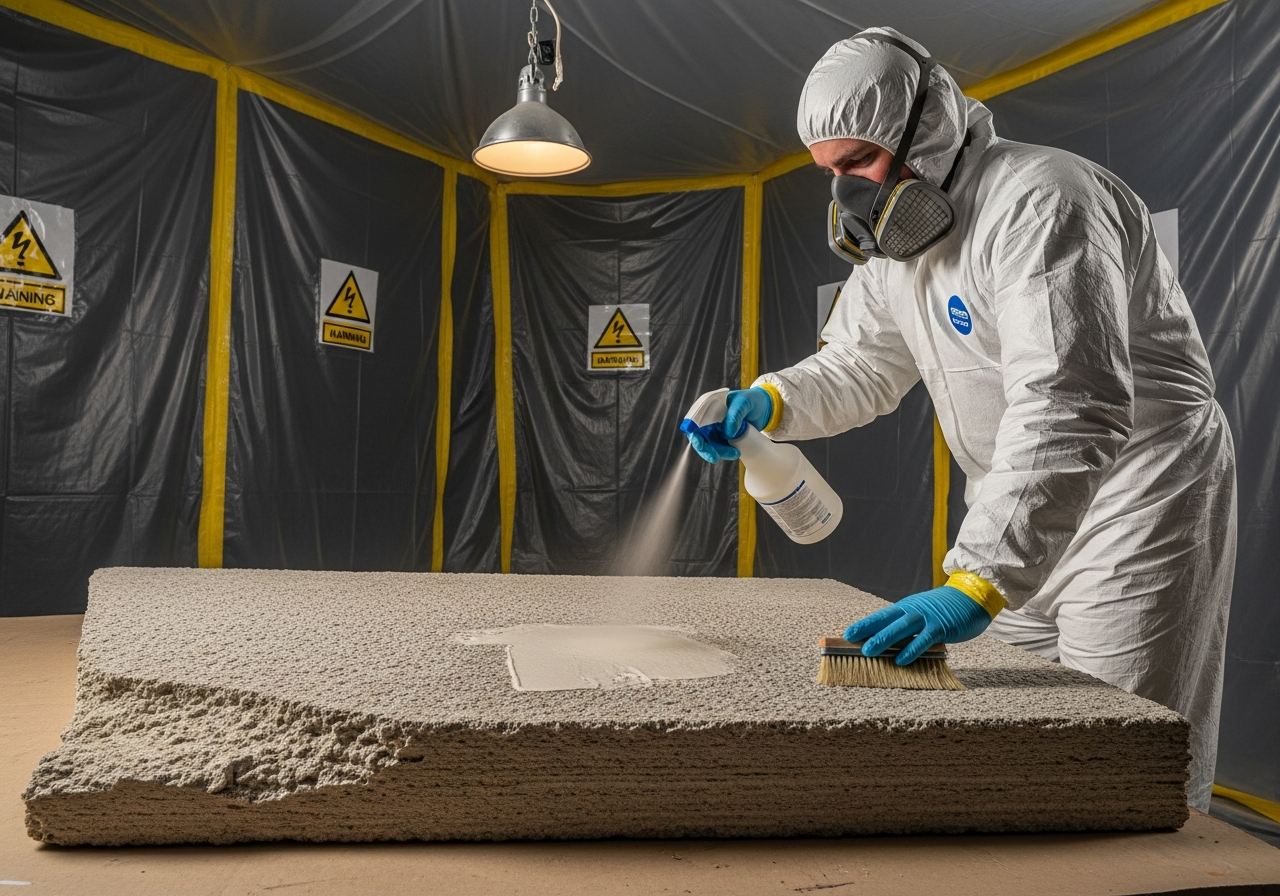
How we contain asbestos during removal
Every job uses multiple controls so airborne fibres are suppressed, contained and removed safely.
Sealants & encapsulants
We use approved wetting agents and encapsulant sealants to suppress loose fibres before and during work. This reduces dust generation when cutting or removing asbestos-containing materials.
Enclosures & negative pressure
Work areas are isolated with polyethylene sheeting and self-supporting frames where required. Portable negative pressure units with HEPA filtration create inward airflow so asbestos dust cannot escape the enclosure.
Wet methods & low-impact removal
We keep materials damp during handling and use manual dismantling where practicable to limit fibre release. Power tools are avoided unless strictly controlled with extraction and damping.
PPE & decontamination
Our crew wear appropriate PPE including respirators, disposable coveralls and gloves. We set up decontamination zones so personnel and tools are cleaned before exiting the enclosure.
Double-bagging & secure transport
Waste is double-bagged, labelled and sealed on-site. C&A only transports asbestos waste to EPA-licensed disposal facilities using approved vehicles and methods.
Documentation & compliance
You receive full job documentation including waste tracking receipts, disposal dockets and a record of controls used on site. We follow Safe Work Australia's Code of Practice for asbestos removal.
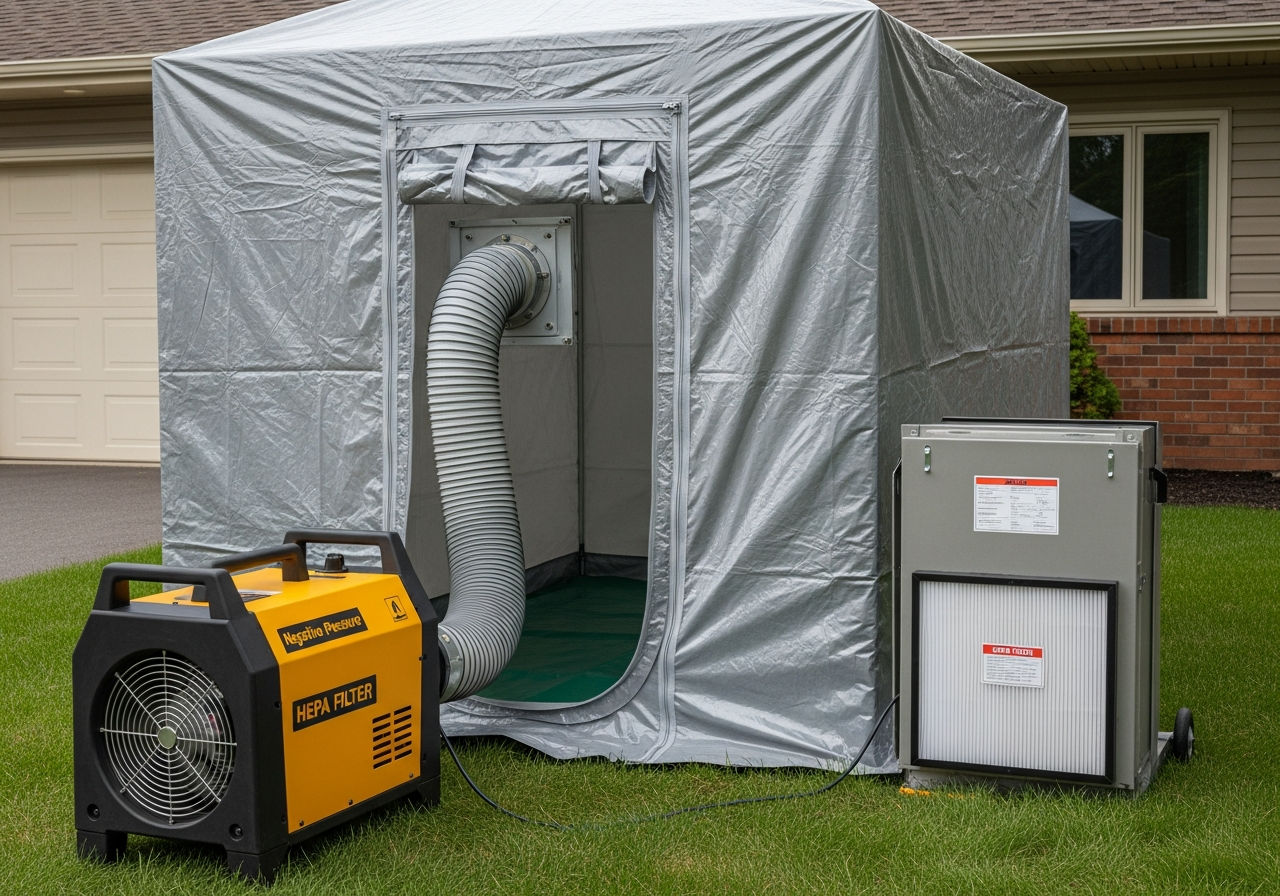
Negative pressure & HEPA filtration — the last line of defence
Negative pressure units draw air into the containment and filter exhaust through HEPA filters, preventing contaminated air escaping into the surrounding environment. Our equipment is maintained and tested to ensure performance on every job.
We coordinate independent air monitoring on request or where required by regulations to verify the work area is safe before reoccupation.
Licensed disposal you can trust
Containment is only one part of safe asbestos management — responsible disposal completes the process. C&A ensures all asbestos waste is transported to EPA-licensed facilities and receipted for your records.
- Waste is transported in approved containers and vehicles by trained staff.
- All loads are directed to EPA-licensed disposal facilities and receipted for your records.
- You receive documentation including disposal dockets and a summary of controls used on site.
Our step-by-step containment process
Site assessment & tailored controls
We assess the material type, condition and access constraints, then design the containment strategy — enclosure, negative pressure requirements, PPE and waste handling.
Containment setup & verification
We erect enclosures, set up negative pressure units and verify airflow and seal integrity before any disturbance of asbestos-containing material.
Controlled removal & waste handling
Materials are kept wet, removed with low-impact methods, double-bagged and labelled inside the containment, then staged for secure transport.
Final clean, monitoring & sign-off
We clean the area, remove containment and can arrange independent air monitoring where required. You receive disposal dockets and a completion report.
Frequently Asked Questions
What is a containment enclosure and when is it used?
A containment enclosure isolates the work area using durable sheeting and seals. It's used when asbestos removal could release fibres to adjacent areas — for example during roofing, ceiling or internal wall removal.
How do negative pressure systems protect the site?
Negative pressure units draw air into the enclosure and filter outgoing air through HEPA filters, ensuring contaminated air does not escape. They are essential where containment alone may not prevent airborne fibre migration.
Can you use sealant on every asbestos surface?
Sealants and encapsulants are effective on many friable or loose surfaces but suitability depends on the material type and condition. Our assessment identifies whether sealant, removal, or both are required.
What happens to the asbestos waste after removal?
We double-bag and label waste on-site, transport it to an EPA-licensed disposal facility and provide disposal receipts. This completes the containment and removal chain so you have a clear audit trail.
Containment and removal done right
C&A Asbestos Removal provides calm, professional service with documented controls, licensed disposal and clear communication. We work with homeowners, strata and businesses across Australia.
Free no-obligation quotes. Speak directly to our team — no call centre.
Category: Asbestos Removal